Going to a Methadone Clinic: A Family's Guide to Opioid Treatment Programs
A practical walkthrough of methadone clinics: the first visit, daily dosing, federal take-home rules, guest dosing on the road, drug tests, and what it costs.
Going to a Methadone Clinic: A Family's Guide to Opioid Treatment Programs
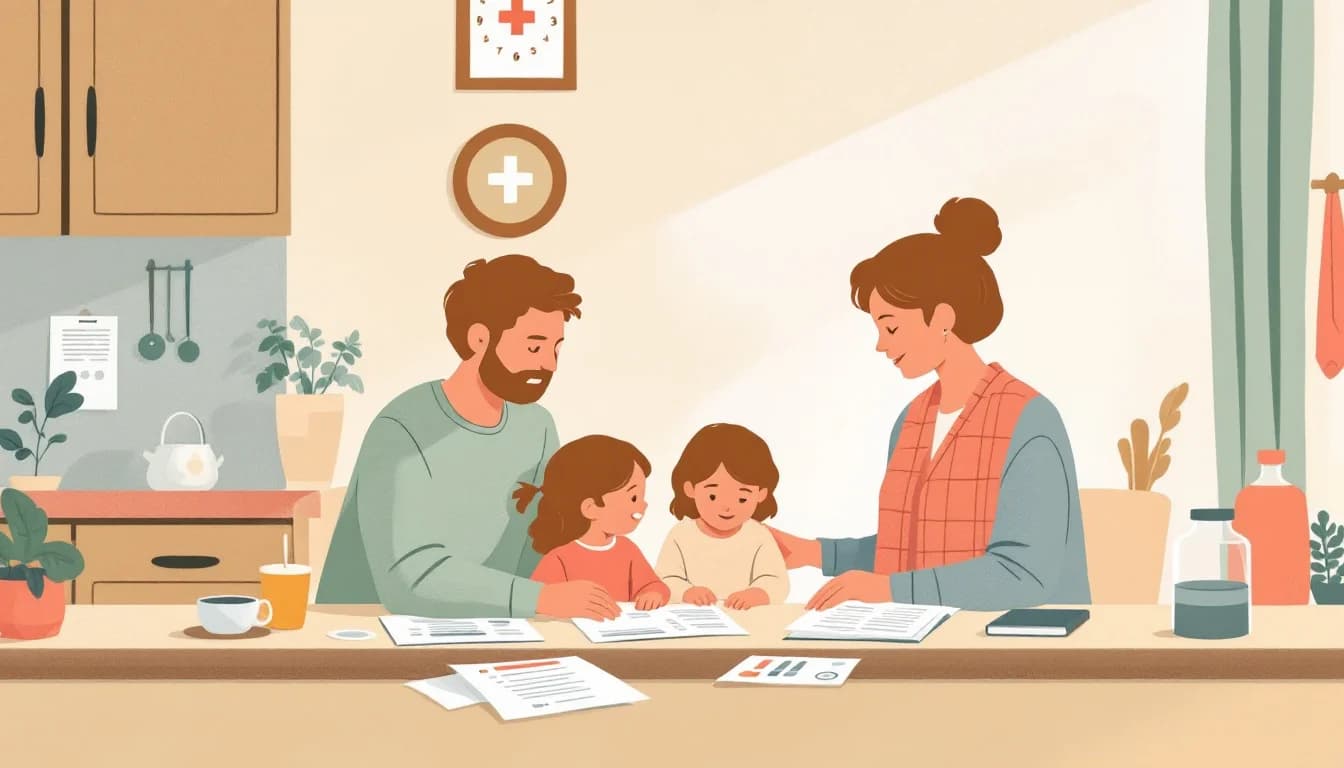
The first time most families see a methadone clinic, it is 5:45 in the morning and there is already a line. Someone's adult son is in it, or someone's husband, and the relative waiting in the car has a list of questions nobody has answered: how long does this take, what happens inside, why can't the prescription just be filled at a pharmacy, and is this even treatment or is it just a legal way to keep using.
Those questions have concrete answers, and most of them are written down in federal regulation. This guide walks through what an opioid treatment program is, what happens on the first visit, how daily dosing and take-home doses actually work, what the rules are for travel, drug testing, pregnancy, and cost, and what families can do that helps rather than backfires.
What an Opioid Treatment Program Actually Is
Methadone is a medication, not a substitute street drug. It binds to and activates the same mu-opioid receptors as heroin, fentanyl, and prescription opioids, but it activates them more slowly and stays in the body longer. The result, in a person with opioid use disorder, is that withdrawal symptoms and cravings are controlled without the intense rush the other drugs produce.
The catch is distribution. In the United States, methadone for opioid use disorder is only available through an approved opioid treatment program (OTP) — not a regular pharmacy, not a primary care office. That single fact explains most of what families find inconvenient about the arrangement.
An OTP has to be certified by the federal government and accredited by an independent accrediting body, and its certification runs for a term of no more than three years at a time. Programs are held to a set of federal treatment standards covering admission, medical exams, counseling, drug testing, dosing limits, and take-home eligibility. That matters to you as a family member for one practical reason: the clinic is not improvising. When staff say "that's the rule," there is usually a regulation behind it, and you can read it.
Methadone itself is not a new or experimental treatment. The National Institute on Drug Abuse notes it has been used for more than 50 years, that methadone and buprenorphine can be equally effective at reducing opioid use, and that methadone may help some people stay in treatment longer. For background on how it compares with the other medications, see our guide to medication-assisted treatment.
The First Visit: What Happens, in Order
Admission is a medical process with specific steps, and knowing them takes some of the fear out of the first morning.
A screening examination. Before anyone is dosed, a licensed practitioner has to confirm that the person meets diagnostic criteria for moderate to severe opioid use disorder, screen for contraindications, and confirm that the patient is choosing medication voluntarily with informed consent. If that screening exam is done outside the program, it has to be completed no more than seven days before admission and the results sent over.
A first dose with a ceiling. The initial methadone dose is set individually, based on which opioids the person has been using, what else they take, their medical history, and how severe the withdrawal is. Federal standards say the total dose for the first day should not exceed 50 milligrams unless the program's practitioner documents a specific medical reason for going higher — for example, a verified transfer from another program on a higher dose. Families sometimes expect the dose to be "enough" on day one. It usually is not, and that is intentional.
A full examination within two weeks. A complete history and physical, with lab testing as the practitioner orders it, must be completed within 14 calendar days of admission. A behavioral health assessment and a written care plan — goals, agreed actions, harm reduction, housing and employment needs — are due in the same window. A periodic physical is required at least once a year after that.
Drug testing and the care plan. Random drug testing is part of the program, with a federal floor of at least eight random tests per year.
Telehealth is allowed for part of it. The screening and full exam may be done by telehealth for patients being admitted on either methadone or buprenorphine, when a practitioner decides an adequate evaluation is possible remotely. For methadone, the regulation requires an audio-video platform, with audio-only permitted only when video is unavailable and the patient is physically with a licensed prescriber. In practice this means some programs can start someone faster than the old "come in for three mornings" model suggested. Ask.
What to bring: photo ID, insurance or Medicaid card, any prescriptions and a list of current medications, and — if the person is transferring — the name and contact of the previous program. Also bring patience. Intake days are slow everywhere.
Daily Dosing and the Shape of the Week
New patients generally attend every day or almost every day at first. Early dosing hours exist precisely because people need to get to work, so most programs open before dawn and keep a window open in the morning. Ask three questions before choosing a program: what the dosing hours are, whether there is a later window, and what happens if someone arrives five minutes after closing.
The morning routine is the part that reorganizes a household. If your family member has no car, the daily trip becomes the week's central logistics problem, and it is worth solving early — a bus pass, a reliable ride, a program closer to home or on a work route. Transportation is the most common reason people miss doses, and missed doses are the most common reason a stable patient suddenly is not stable.
Dose adjustments are normal, not evidence of failure. A dose that controls withdrawal at week one may be too low once the person returns to work and physical activity. Dose changes are a clinical decision made with the program's practitioner; families who call the clinic demanding a higher dose, or a lower one, usually slow things down.
Take-Home Doses: The Rules Changed, and Most Families Are Working From Old Information
This is where the gap between what families believe and what the regulations say is widest. Many people still describe a rigid old schedule — 90 days of daily attendance before the first take-home, then a slow ladder of phases. The federal standards were rewritten in 2024, and the current structure is different.
Clinic-closed days first. Any patient in comprehensive treatment may receive take-home doses for the days the clinic is closed, including one weekend day and state and federal holidays, regardless of how long they have been in treatment.
Everything beyond that is a clinical judgment. Decisions about additional take-home doses are made by a licensed program practitioner or the medical director, who weighs whether the therapeutic benefit outweighs the risk. The regulation lists factors to consider: absence of active substance use and of other conditions that raise overdose risk, regularity of attendance, absence of serious behavioral problems, no known recent diversion, and whether the medication can be safely transported and stored.
The caps rise with time in treatment. Beyond the closed-day doses, the take-home supply is limited to 7 days during the first 14 days of treatment, up to 14 days from day 15, and up to 28 days from day 31. Those are ceilings, not entitlements: a program may give fewer, and the reason for whatever it decides has to be documented in the patient's record.
NIDA notes that since 2020 new regulations allow many people who have been in treatment for a while to receive up to 28 doses to take home, and that NIDA-funded studies found more take-home doses to be safe and possibly helpful for retention.
Two safety requirements follow from this, and they are not optional formalities. Each take-home dose must be packaged to reduce the risk of accidental ingestion, including child-proof containers, and labeled with the program's name, address, and phone number. Programs must also educate each patient on safe transport and safe storage at home, including child and household safety. If a household has young children, a lockbox is not paranoia; it is the standard the clinic is required to teach.
Practically: store methadone locked, keep it out of bathrooms and purses, never transfer it to a pill organizer or an unlabeled bottle, and know that a single accidental pediatric ingestion is a 911 call, not a wait-and-see.
Travel, Moving, and Guest Dosing
Federal rules allow only one program at a time, with a defined exception. A patient may be dosed at another OTP when they cannot get to their own — travel for work or family events, temporary relocation, or a program's temporary closure — but the medical director or practitioner at the home program has to agree that the circumstance applies, and the justification has to be noted in the record at both programs.
What families should take from this: guest dosing is arranged, not improvised. Call the home clinic well before the trip, ask what notice they need, ask which receiving clinics they will coordinate with, and confirm the receiving clinic has bed space and a dosing window that matches the itinerary. A vacation planned around "I'll sort it out when I get there" is how people end up in withdrawal in a hotel room.
Drug Tests and Counseling: What Is Required, What Is Not
Drug testing is required, and it is not an accusation. The federal floor is at least eight random tests per year per patient, using tests that have FDA marketing authorization for commonly used and misused substances, with frequency shaped by the patient's stability and response to treatment. The same regulation explicitly says programs may still distribute legal harm reduction supplies — fentanyl test strips and the like — so testing patients and helping them check their supply are not in conflict.
Counseling is required to be available, and here is the sentence families most need: a patient's refusal of counseling does not preclude them from receiving medication. Programs must provide substance use counseling and education as clinically necessary and as agreed, but the medication is not held hostage to attendance at group. If a clinic tells you or your family member that methadone will be withheld until they "engage," ask for that policy in writing and ask to speak with the medical director.
Pregnancy, Parenting, and Patients Under 18
Pregnant patients get priority for admission, and the standards direct programs to maintain policies reflecting their specific needs, including split dosing when a practitioner documents that it is clinically appropriate, plus prenatal care either provided or referred. NIDA states plainly that medications for opioid use disorder are safe and effective during pregnancy and breastfeeding.
For patients under 18, a parent, legal guardian, or responsible adult designated by state authority must consent in writing — unless state law grants minors the ability to consent to this treatment on their own. If you are the parent of a teenager facing this decision, our guide to treatment during pregnancy covers the clinical side of medication in pregnancy, and the Medicaid guide covers coverage questions that come up fast with young families.
What It Costs
The answer depends on coverage, and the federal rules are unusually consumer-friendly for people on Medicare.
Under Medicare, Part B covers methadone, buprenorphine, and naltrexone when provided in a doctor's office or through an opioid treatment program, along with counseling, therapy, periodic assessments, and overdose-reversal medications. If the OTP is enrolled in Medicare and meets the program requirements, there are no copayments for those services, though the Part B deductible applies. Part A covers the medications for inpatients; Part D may cover buprenorphine and naltrexone but is not the route for methadone used to treat opioid use disorder. People with both Medicare and Medicaid pay nothing for services through their state Medicaid program. Mobile units count: Medicare recognizes OTP services delivered from mobile vans.
Medicaid coverage of OTP services varies by state in what it pays and how it authorizes treatment, but methadone at a certified program is a long-established Medicaid benefit in most states. Ask the program for its fee sheet in writing, ask which insurances it bills, and ask what a self-pay week costs before the first dose. Our guides to Medicare and to finding treatment without insurance go deeper on the payment side.
One more cost that families do not budget for: the trip. Five or six mornings a week of fuel, bus fare, or a rideshare adds up to real money, and it is the expense most likely to derail attendance in month two.
"Isn't This Just Trading One Drug for Another?"
This is the question families ask most, and it deserves a direct answer rather than a slogan.
Methadone and buprenorphine do produce physical dependence. NIDA is explicit about that: stopping abruptly can cause withdrawal. But dependence is not the same thing as addiction, and at prescribed doses these medications control cravings and withdrawal without producing the intense euphoria that drives compulsive use — which is why NIDA describes them as less addictive than the drugs they replace. The same page notes that misuse typically happens when the medication is injected rather than taken orally as prescribed, which is one reason methadone is dispensed as an oral liquid or tablet formulated to make injection difficult.
Length of treatment is individual, and federal standards protect the patient's say in ending it: a program must ensure that a patient who chooses to taper is offered the opportunity to do so with informed consent, at a rate both agree on, chosen to minimize taper-related risks, with that consent documented. What the standards do not do is set a fixed clock that forces someone off medication.
The version of this question families should actually ask their relative is different: "What would make you feel ready to taper, and what would you want in place first?" That question gets an answer. "When are you getting off that stuff" gets a door.
What Families Can Do That Actually Helps
- Solve transportation before month two. Not month one — month one has adrenaline in it.
- Buy a lockbox and use it for everyone's medication, not just the methadone. This normalizes the practice instead of marking your relative as the risk.
- Keep naloxone in the house and know how to use it. Our naloxone guide covers where to get it, often free.
- Do not count doses, audit the bottle, or inspect the lockbox. Diversion control is the clinic's job; a household that polices medication turns every morning into a court hearing.
- Do not push a taper on your own schedule. Pressure to reduce is one of the most reliable ways to get someone to hide a dose increase.
- Attend family sessions if the program offers them, and ask whether it does. Counseling is part of the required service package, and family involvement is often available even when it is not advertised.
- Write down the logistics — dosing hours, the practitioner's name, the guest-dosing notice period, the pharmacy or clinic phone number — somewhere the whole household can find it.
If your relative is not yet willing to go, our guide to choosing a treatment center covers how to compare programs, and the MAT overview explains the medication options a clinic may offer.
Red Flags Worth Leaving a Clinic Over
Most OTPs are competent. A few are not, and the warning signs are consistent:
- A clinic that cannot tell you its take-home policy when you ask, or that describes a schedule that contradicts the federal caps.
- Dosing without a documented screening examination, or a "full exam" that never happens.
- Cash-only payment with no receipts and no fee sheet.
- No overdose education and no naloxone on site.
- Pressure to taper quickly for administrative convenience — for example, a program clearing its roster before an inspection.
- Staff who discuss one patient's dosing in front of other patients.
- A program that will not tell you the name of the medical director.
You can check whether a program is listed as an opioid treatment program and find alternatives through FindTreatment.gov, the federal locator.
Where to Get Help
- SAMHSA National Helpline: 1-800-662-4357, free, confidential, 24/7, English and Spanish.
- FindTreatment.gov: search by ZIP code for OTPs, buprenorphine providers, and sliding-scale programs.
- 988 Suicide and Crisis Lifeline: call or text 988 for a mental health or suicidal crisis.
- Poison Help: 1-800-222-1222 for any suspected medication ingestion, especially a child and a take-home dose.
- 911 for slowed breathing, unresponsiveness, or a suspected overdose — naloxone first, then call.
The line at 5:45 in the morning is not a sign that something has gone wrong. It is what treatment looks like when a medication has to be dispensed under supervision and the rest of a life still has to happen afterward. Knowing the rules does not make the early mornings easier, but it does mean your family is arguing about the right things.
Sources
- Electronic Code of Federal Regulations — 42 CFR Part 8, Medications for the Treatment of Opioid Use Disorder
- Electronic Code of Federal Regulations — 42 CFR § 8.12, Federal Opioid Use Disorder treatment standards
- National Institute on Drug Abuse — Medications for Opioid Use Disorder
- Medicare.gov — Opioid Use Disorder treatment services coverage
- Centers for Medicare & Medicaid Services — Opioid Treatment Programs (OTP)
- SAMHSA — FindTreatment.gov
- SAMHSA National Helpline — 1-800-662-4357
You might also read