The Sibling in the Room: A Practical Guide for Brothers and Sisters of Someone With Addiction
A practical guide for brothers and sisters of someone with addiction: your own risk, the roles you take on, how to set limits, and where to find support.
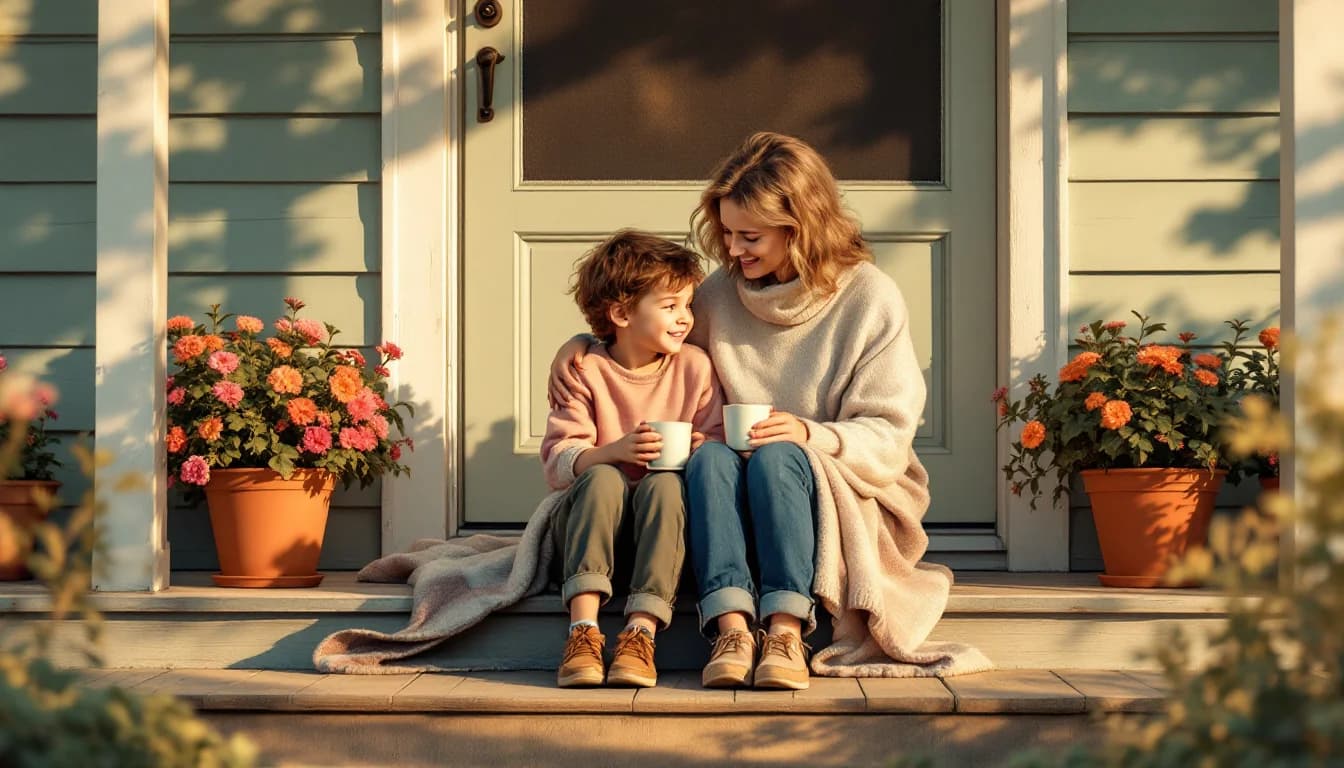
When a family finds out that one child is using, the whole household reorganises around that fact. Money moves. Conversations change. Holidays get planned around who can be in the room. And usually one person ends up carrying the logistics, the secrets, the translating between family members, and the worry — and it is rarely the person everyone is worried about.
If you are the brother or sister, you probably already know this. You may also know the strange position of being the person nobody asks about: too close to the problem to be a bystander, too far from it to be the patient. This guide is for you — whether you are fifteen and still living at home, or fifty and suddenly the one calling treatment centres, or grieving a sibling who has died.
Why Siblings Get Lost in the Shuffle
Parents of a child with a substance use disorder are visible in the system. They call intake lines, sit in family sessions, sign releases, and show up in waiting rooms. Siblings do all of that far less often, and the research keeps noticing.
In an Icelandic study of 143 relatives attending a four-week family program for people affected by a loved one's substance use, only ten of the participants were siblings, and just 9% of everyone enrolled — all of them women — said they had come because of a brother's or sister's drug use. The same study found that at least 36% of participants scored in the average-to-very-serious range for depression, anxiety, or stress on a standard symptom scale. And when the researchers compared relatives by relationship, the type of relative made no significant difference to how bad the scores were: spouses, parents, adult children, and siblings were all struggling.
That is the paradox. Siblings are affected as much as anyone, and least likely to be in the room where help is handed out.
Qualitative research explains part of it. In a Norwegian study of 14 people whose brother or sister had died of a drug-related death, the sibling position came out as a set of rules: survive the difficult family life, absorb the constant change in your relationship with your sibling, and accept that "it's worse for the parents." Siblings described themselves as protective of their parents and responsible for their parents' happiness — which conveniently means their own distress is never the most urgent thing in the house.
A second Norwegian study of ten bereaved siblings named the consequence: the "strong sibling role." Siblings stayed composed, suppressed visible grief, and got little support beyond a small trusted circle, because to ask for help would be to compete with the person who was "really" suffering.
What the Research Actually Says About Your Own Risk
Siblinghood runs in both directions. Living with a sibling who uses is hard; being genetically and environmentally close to a sibling who uses also carries measurable risk of developing a substance use disorder yourself. This is worth stating plainly, because the honest version is more useful than either denial or fatalism.
The strongest single number comes from a population-based cohort in Manitoba: of 134,389 children and 31,307 full sibling pairs, an older sibling with a diagnosed substance use disorder was associated with an adjusted relative risk of 3.85 (95% CI 2.53–5.87) for an adolescent substance use disorder. For comparison in the same cohort, a mother's history carried a relative risk of 2.50 and a father's 2.15; both parents together, 3.74.
A separate family study of 803 young people and their first-degree relatives found that among all family members, siblings produced the most consistent unique effects on substance-specific risk. In other words, what happens with your brother or sister tracks your risk more tightly than most of us would like to admit.
The mechanism is not mystery. NIDA lists family history of substance use disorders as a risk factor alongside trauma and easy access to drugs, and lists healthy family and peer relationships and financial stability as protective. Genetics loads the dice; environment, opportunity, and coping skills decide a good deal of how the game is played. Risk is not destiny, and it is also not a verdict about your character.
If You Are the Younger Sibling
You are the one with the older model. That cuts both ways: older-sibling substance use is a real risk factor, but older siblings are also the most credible source of the opposite message, and households where the older child is doing well tend to have younger children who do too. If you are in the years where drinking and using start to look normal, the most useful question is not "am I like my brother?" but "what am I actually choosing, and what am I choosing it for?"
If You Are the Older Sibling
You may be carrying a load of guilt that has no evidence behind it — as though your job was to model perfect behaviour and you failed. There is no study that says your sibling's disorder was your responsibility. There is a good deal of evidence that you are at elevated risk yourself, which is a reason to protect your own use, not a reason to punish yourself.
The Jobs Siblings Take On Without Being Asked
Ask a sibling what they do for their brother or sister and you rarely get "nothing." You get a job title nobody assigned.
The third parent. Especially in single-parent or high-conflict households, the responsible sibling becomes the one who checks where the other one is, covers for them at school, or raises their children. Research on siblings of people with problematic drug use describes this role openly, and it is rarely acknowledged by the adults around them.
The confidant. In one family story, a brother described himself as "his psychologist" — the one person the sibling with addiction actually talked to. That role is flattering and exhausting, and it has no supervision, no boundaries, and no support attached.
The switchboard. You end up being the person who tells Dad what Mum already knows, updates the grandparents, and fields the 2 a.m. calls. Being the family's communications network is administrative labour with a clinical payload.
The family's public face. Siblings often become the one who keeps things normal — the one who does well at school, does not cause trouble, and gives the family something to point at. That role is a job too, and it is usually invisible until it collapses.
The keeper of the money. Adult siblings get asked for rent, bail, a car, a phone, "just this once" — a request that arrives with a family history attached and no one else to say no.
What Helps: A Practical Playbook
Nothing here asks you to stop loving your sibling. The goal is to stay in the relationship without disappearing into it.
Decide What You Will and Will Not Do — Before You Are Asked
Write it down if that helps. The categories that matter are money, housing, transport, and covering. "I will pay for a treatment copay directly to the provider, and I will not give cash." "You can stay here for a night if you are not using, and I will not hide it from Mum." "I will drive you to an appointment, and I will not drive you to a dealer's neighbourhood." Deciding in advance is what keeps a boundary from becoming a fight in the moment.
Talk to Your Sibling Like a Person
Lectures are the family's default register and they rarely land. What tends to work is specific, non-clinical, and short: what you have noticed, why it worries you, what you are willing to do. "I saw you nod off at dinner twice this month and it scared me. I'd drive you anywhere you wanted to go on Thursday if that's useful" is a human sentence. "You're ruining this family" is a verdict.
Get Out of the Middle
If you are the switchboard, hand the job back. "Mum, you need to talk to him directly" is a complete sentence and a legitimate policy. Being the family's router keeps you in a position where you cannot win: every message you carry makes you responsible for how it lands.
Watch Your Own Drinking and Using
This is the least popular paragraph in any guide written for siblings and the most important one. Your risk is elevated, and the years when a sibling's disorder is active are exactly the years when a drink starts doing more work than it should. If you have noticed that you need something to get through family calls, that is a clinical signal, not a personality flaw.
If You Are a Teenager Still Living at Home
Teenage siblings get the worst deal: the same fear as adults, no authority, no car, and no legal standing to be told anything.
- You are allowed to ask for help of your own. Your school counsellor, your GP, or a trusted adult outside the family can hold this with you. You do not need your parents' permission to talk to a counsellor about your own feelings.
- Alateen is a free peer program run by Al-Anon Family Groups for young people aged 13 to 18 affected by someone else's drinking. Its own materials are explicit that it is not a treatment program and not for teenagers seeking help for their own substance use — so treat it as support for you as a relative, and use a clinician or a school program for anything about your own use.
- Do not handle the drugs. If you find pills, powder, or a stash, do not touch it, do not keep it as evidence, and do not confront your sibling alone. Fentanyl makes this an actual safety rule, not a metaphor, and hands are not the only route of exposure — residual powder on a surface is enough to hurt a child or a pet.
- Learn where naloxone is. A household with opioid use should have naloxone in it, and a teenager can absolutely be the person who knows where it is kept and how to use it. See our guide to getting naloxone for your family.
- Calling 911 is the right call, always. Every state has some form of Good Samaritan protection for people who call for help during an overdose; the details vary, but the direction does not. A dead sibling is not a lesson anyone learns from.
Adult Siblings: Money, Decisions, and the Long Haul
By the time everyone is grown, the sibling often becomes the family's operations manager. Three things are worth knowing before that happens.
You cannot get information without a release. Substance use disorder treatment records are protected by federal confidentiality rules (42 CFR Part 2) on top of ordinary medical privacy, and a sibling is not on the list of people who can be told anything without the patient's written consent. This is not the program being obstructive. Our guide to confidentiality under 42 CFR Part 2 explains what a release covers.
Legal authority requires paperwork, not seniority. Being the oldest does not make you the decision-maker. A power of attorney requires your sibling to sign it while they have capacity; guardianship requires a court to find that they do not. If you expect to be managing care later, the conversation has to happen earlier — and it is much easier when it is framed as "I want to be able to help," not "I want control."
Decide the money policy once. Adult siblings are frequently the family's lender of last resort, and the requests come with an implied threat: refuse, and you are the one who abandoned them. Decide your policy in a calm week and apply it in a bad one. Direct payment to a provider, a written agreement, a cap, a "no" — any of these is more humane than an endless maybe.
If Your Sibling Dies
Roughly one in five bereaved siblings after a drug-related death reports high levels of prolonged grief symptoms. In a Norwegian survey of 234 family members, 26% overall met that threshold, and the proportions were 31.2% for parents, 21.8% for siblings, and 20.9% for children. The strongest associations were with suicidal thoughts, withdrawal from others, and time since the loss — and grief did not simply fade: the group with the highest symptom levels was the one who had lost someone one to two years earlier.
Two findings from sibling-specific research are worth carrying into that period.
First, the support usually fails, and not because people are cruel. In interviews with bereaved siblings, the barriers were complex family dynamics, different grief reactions inside the same family, stigma, shame, and a kind of protective silence in which nobody wants to raise the subject. The siblings themselves kept the strong role going. As one of the studies puts it, peer support from other bereaved people was essentially absent — the one form of support that siblings most needed.
Second, the sibling's grief is often disenfranchised: the world treats the parents as the bereaved and the sibling as support staff. If you have found yourself comforting other people at your own sibling's funeral, that is the pattern, and it is a reason to find one person or group where your loss is the main event.
There is also a finding that does not minimise any of this: in a mixed-method study of 78 bereaved siblings, most reported genuine post-traumatic growth — appreciation of life and personal strengths above all, often alongside closer family relationships and a sharper empathy for people in hard situations. Notably, self-efficacy explained most of the variance in growth, while social support on its own did not. What that suggests practically is that your own sense of agency — small decisions, structure, doing one useful thing — is not a distraction from grieving. It appears to be part of how people come through.
If you are grieving a sibling and having thoughts of ending your life, that is an emergency, not a character flaw, and the survey above found suicidal thoughts were one of the strongest correlates of severe grief. Call or text 988 in the US. Our guide on grief after an overdose death goes further into the practical side.
Where Siblings Can Get Support
- Al-Anon Family Groups and Alateen — free peer meetings for people affected by someone else's drinking, including a dedicated teen program. Al-Anon's own framing is alcoholism-specific; if your sibling's drug of choice is an opioid or a stimulant, the meetings are still full of people managing the same family dynamics, and they are free.
- Nar-Anon Family Groups — the parallel fellowship for families and friends of people who use drugs.
- SAMHSA National Helpline, 1-800-662-4357 — free, confidential, 24/7, English and Spanish, and it will help you find family programs and sliding-scale care in your area, not just treatment for your sibling.
- FindTreatment.gov — filter for family counselling and outpatient programs near you.
- A therapist of your own. Not a family therapist, not your parents' therapist. Yours. If cost is the barrier, our guide to self-care and support for family members covers the low-cost routes.
- 988 for crisis support, any hour, for you.
The Bottom Line
You are not the patient and you are not the staff. You are a person with your own elevated risk, your own grief, and your own life, in a relationship that matters more than most. The sibling position is genuinely harder than it looks from outside, and the research is unambiguous that it is under-supported.
What helps is unglamorous: decide your limits in advance, speak in plain sentences, hand the switchboard back, watch your own use, learn where the naloxone is, and find at least one place where your experience is the point of the conversation rather than an afterthought. If your sibling recovers, you will have a relationship to return to. If they do not, you will have something left of yourself to grieve with. Both of those outcomes are worth protecting now.
If you are the sibling and you are struggling, you are also allowed to be the one who gets help first.
Sources
- Hamad AF, Roos LL, Bolton JM, Wall-Wieler E — Familial associations in adolescent substance use disorder: a population-based cohort study. Addiction. 2022;117(10):2720-2729. PMID 35768957
- Farmer RF, Kosty DB, Seeley JR, Gau JM, Klein DN — Family Aggregation of Substance Use Disorders: Substance Specific, Nonspecific, and Intrafamilial Sources of Risk. J Stud Alcohol Drugs. 2019;80(4):462-471. PMID 31495384
- Titlestad KB, Dyregrov K — Does 'Time Heal all Wounds?' The Prevalence and Predictors of Prolonged Grief Among Drug-Death Bereaved Family Members. Omega (Westport). 2024. PMID 35482973
- Dyregrov K, Titlestad KB, Selseng LB — Why Informal Support Fails for Siblings Bereaved by a Drug-Related Death: A Qualitative and Interactional Perspective. Omega (Westport). 2025. PMID 36154325
- Lindeman SK, et al. — Living with sibling' drug use. Bereaved siblings' family stories. Int J Qual Stud Health Well-being. 2023;18(1). PMID 37506373
- Reime MA, Kleppe LM, Bringedal N, Titlestad KB — Posttraumatic Growth Among Siblings Bereaved by a Drug-Related Death: A Mixed-Method Study. Behav Sci (Basel). 2026;16(4). PMID 42073914
- Ólafsdóttir J, Hrafnsdóttir S, Orjasniemi T — Depression, anxiety, and stress from substance-use disorder among family members in Iceland. Nordisk Alkohol Nark. 2018;35(3):165-178. PMID 32934525
- NIDA — Prevention (risk and protective factors, family-based programs)
- Al-Anon Family Groups — Teen Corner (Alateen)
- SAMHSA National Helpline — 1-800-662-4357
You might also read