Gambling Addiction Treatment: A Family Guide to Gambling Disorder and Recovery
Sports betting is now one tap away, and problem gambling is rising. What gambling disorder looks like, how it is treated, and how families can help.
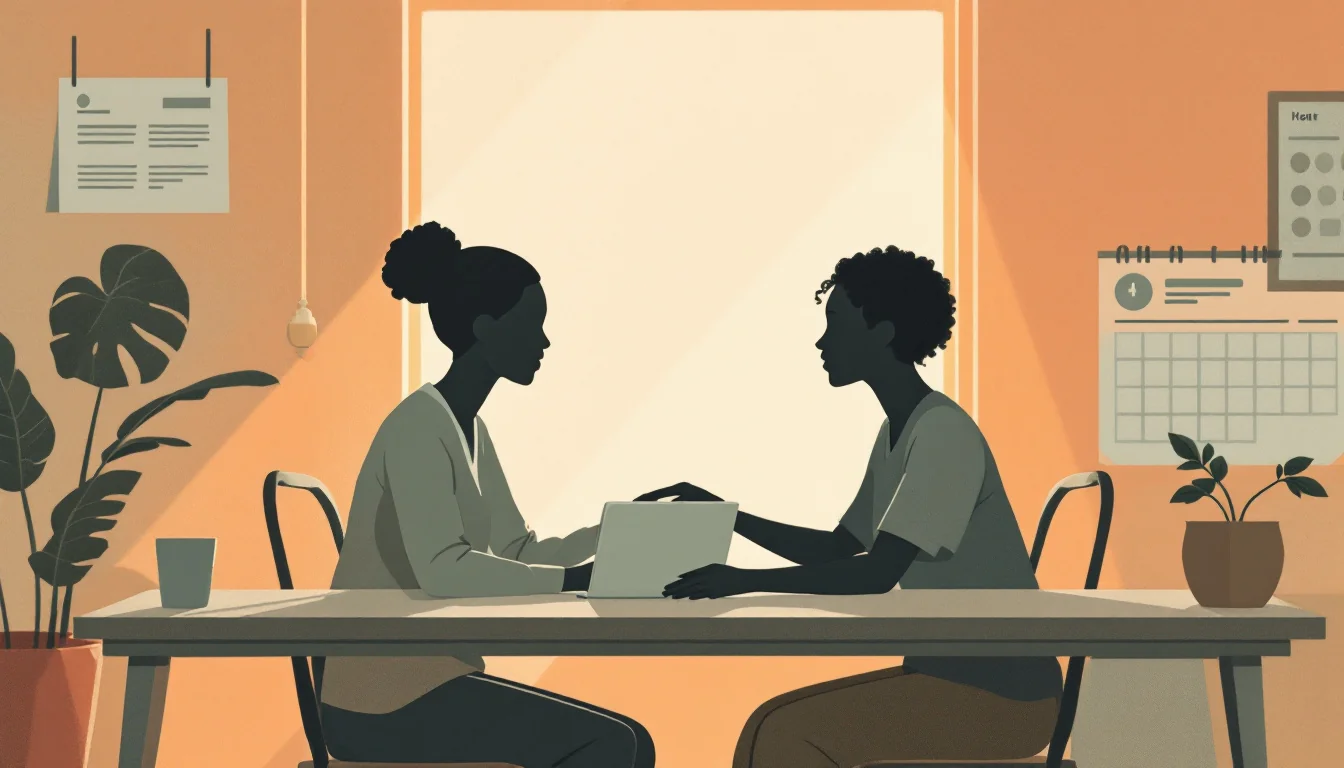
For most families, the discovery does not arrive dramatically. It arrives as something smaller and stranger. A savings account quietly empty. A dozen small charges to the same app. A phone that gets turned face-down when someone walks into the room. A partner who used to watch the game for fun and now cannot watch it without betting on it.
Gambling has always been part of American life, but the way it reaches people has changed completely. It used to require a trip to a casino, a racetrack, or a ticket counter. Now it lives inside the phone already in everyone's pocket, available at every hour, in almost every state, on a device designed by some of the smartest product teams in the world to keep people coming back.
That shift has made an old, under-recognized illness much easier to develop and much easier to hide. This guide is for the spouses, parents, adult children, and friends who suspect something is wrong. It covers what gambling disorder is, why it behaves like a drug addiction in important ways, what effective treatment looks like, how to pay for it, and what families can do that helps rather than backfires.
What gambling disorder really is
Gambling disorder is a recognized medical diagnosis, not a moral failing or a "money problem." The American Psychiatric Association classifies it as a behavioral addiction, and it sits in the same diagnostic family as substance use disorders — the only non-substance behavior to be included there.
The core of the illness is loss of control over gambling despite significant harm. A diagnosis requires at least four of nine criteria occurring within a twelve-month period. Among them:
- Needing to gamble with increasing amounts of money to achieve the same excitement.
- Feeling restless or irritable when trying to cut down or stop.
- Repeated unsuccessful efforts to control, cut back on, or stop gambling.
- Being preoccupied with gambling — reliving past bets or planning the next one.
- Gambling when feeling distressed, anxious, or low.
- Chasing losses — going back after losing money to try to win it back.
- Relying on others to help with money problems caused by gambling.
- Lying to family members or others about how much is being gambled.
- Jeopardizing relationships, work, school, or opportunities because of gambling.
Two details matter enormously for families.
First, the amount of money does not define the problem. A person with a large income and a healthy bank balance can still have a gambling disorder. Harm is the defining feature — broken trust, lost time, destroyed relationships, mounting debt, and emotional distress.
Second, the problem is emotional before it is financial. Paying off gambling debts does not treat the illness. After the debt is cleared the underlying pattern usually remains, and families that repeatedly clear debts often end up in the same position months later with less money and more resentment.
A two-question starting point
If you are unsure whether what you are seeing crosses a line, the American Psychiatric Association suggests two questions families can ask themselves:
- Has your loved one ever had to lie to people important to them about how much they gambled?
- Have they ever felt the need to bet more and more money?
A "yes" to either one suggests a gambling problem is present and worth taking seriously.
Why this is not just a bad habit
It is commonly assumed that gambling is a choice a person could stop making if they truly wanted to. That assumption collapses once you look at how gambling interacts with the brain's reward system: it produces the same reward-circuit activation as drugs and alcohol, and the same escalation of tolerance follows. Just as a heavy drinker needs more alcohol to feel the same effect, a person with a gambling problem needs larger and more frequent bets to feel the same thrill. That is not a character flaw; it is the illness doing what it does.
Two features of modern gambling make it a particularly effective hook:
- Speed of play. Clinical observation suggests the faster a wager reaches its outcome, the more likely a game is to produce problems. A football game offers a handful of wagering decisions; a mobile casino game offers a new outcome every few seconds, all day and night.
- Constant availability. A betting app is already installed, logged in, and linked to a payment method — there is no gap between impulse and action, the gap where a person might otherwise reconsider.
Gambling rarely travels alone
People who develop one addiction are at higher risk of developing another, and a meaningful share of those affected by problem gambling also struggle with alcohol or drug use. Depression, anxiety, bipolar disorder, and ADHD frequently co-occur as well — sometimes driving the gambling, sometimes deepening it. Family patterns matter too: many people with gambling problems report that one or both parents had a drinking or gambling problem.
This is one of the strongest arguments for professional assessment rather than willpower alone. If an untreated depression or anxiety disorder is feeding the gambling, treating only the gambling will not hold.
How common is it — and why the numbers are climbing
The National Council on Problem Gambling estimates that about 2.5 million U.S. adults (roughly 1%) meet the criteria for a severe gambling problem in any given year, and another 5 to 8 million (2–3%) have mild to moderate problems — they do not meet the full diagnosis but are already experiencing harm from their gambling.
Context for those numbers:
- Roughly 85% of U.S. adults have gambled at least once; about 60% have in the past year.
- Some form of legalized gambling is available in 48 states plus the District of Columbia — only Hawaii and Utah have none.
- NCPG puts the annual national social cost of problem gambling at $14 billion, counting criminal justice and healthcare spending plus job loss, bankruptcy, and related consequences.
Most people who gamble — including most who bet on sports, buy lottery tickets, or visit casinos — never develop a disorder. The risk concentrates in a smaller group, and the conditions that create it have become far more common since sports betting expanded across the country after the 2018 Supreme Court decision that opened the door to state-by-state legalization.
Two groups deserve particular attention. Young people are at higher risk than adults of developing a gambling problem, and those who start young are more likely to develop a disorder later in life — for many young adults the first betting account is not opened in a casino but on a phone during college, marketed with sign-up bonuses that make the first bets feel free. Older adults on fixed incomes are at heightened risk of developing a disorder quickly, and the consequences land harder: savings that cannot be rebuilt, alongside prescriptions and health problems. A casino trip that began as social entertainment can become a daily habit before anyone recognizes the pattern.
The hidden harms: what gambling actually costs a family
Families often discover the gambling only after something breaks. By then, several kinds of damage are usually underway.
Financial. Debt, drained savings and retirement accounts, missed rent or mortgage payments, maxed-out cards, loans from relatives, and in severe cases bankruptcy. Borrowing money from others to relieve gambling-driven financial trouble is itself a diagnostic criterion.
Relational. The lying does at least as much damage as the betting, and trust is the slowest thing to rebuild. Many couples describe a period of constant surveillance and checking — an exhausting dynamic that harms both people.
Emotional and medical. Shame, secrecy, and isolation are the norm. Sleep suffers, anxiety and depression worsen, and physical health declines as money and attention shift toward gambling. Lost jobs, lost productivity, and occasionally criminal charges follow the same path.
Suicidal thinking. Problem gambling is associated with elevated risk of suicidal thoughts and, in severe cases, suicide attempts — which is reason enough to treat a disclosure as a medical safety event, not merely a financial one.
What effective treatment looks like
Gambling disorder is treatable, and most people who receive appropriate care improve. There is no FDA-approved medication for gambling disorder, but that is not the same as having no treatment — it means treatment is psychological, behavioral, and practical.
Behavioral therapies with the strongest evidence
- Cognitive behavioral therapy (CBT). The best-supported approach. CBT helps a person identify the specific situations, thoughts, and feelings that trigger betting — the paycheck that arrives on Thursday, the argument with a spouse, the belief that a losing streak is "due" to turn — and to build responses that interrupt the pattern. It also targets the distorted thinking that keeps gambling alive: the illusion of control, the memory that keeps the big wins and forgets the losses.
- Motivational interviewing. A structured, non-confrontational conversation style that helps a person articulate their own reasons to change. It is especially useful with someone who is ambivalent, defensive, or has been pushed into the room by a partner.
- Family and couples therapy. Gambling damages relationships and secrecy, and treatment that involves the people affected does better than treatment that ignores them — addressing both trust and new financial agreements.
Medications — a supporting role, not a first step
Although there is no FDA-approved gambling medication, clinicians do use several medications off-label to reduce urges and cravings, including naltrexone (an opioid antagonist also used in alcohol and opioid use disorder), lithium (a mood stabilizer), and certain antidepressants and antipsychotics.
Two points matter here:
- Medication is generally not the immediate first step. Its most important role is treating a co-occurring condition — depression, bipolar disorder, or ADHD — that is driving or worsening the gambling.
- Some medications can make gambling worse. A specific class of dopamine agonist medications, ordinarily prescribed for Parkinson's disease and some other conditions, has been shown to worsen gambling problems. If someone on such a medication develops new or intensifying gambling behavior, that is a medical issue to raise with their prescriber immediately.
Peer support and structured recovery
Gamblers Anonymous and its family counterpart Gam-Anon follow the 12-step model and provide immediate support, education, and access to people who have recovered. The American Psychiatric Association is explicit that GA is an excellent place to start but not a substitute for professional treatment — the strongest outcomes usually pair peer support with clinical care.
Practical tools that reduce access
These are not treatment in themselves, but they buy time and reduce harm, and any counselor should discuss them:
- Self-exclusion programs. Most states and licensed operators allow a person to be voluntarily barred from gambling venues and online platforms. Once enrolled, the person can be removed and denied payouts if they gamble anyway.
- Deposit limits, cooling-off periods, and account closures inside betting apps — set by the person, often with a partner present for accountability.
- Blocking software on phones and computers, and removal of stored payment methods.
- Handling money differently. Separate accounts, direct deposit into an account the person cannot tap quickly, and a joint monthly review of statements. The goal is not punishment; it is friction between the impulse and the money.
Levels of care
Most people with gambling disorder can be treated in an outpatient setting — weekly therapy, a peer group, and a financial plan. Intensive outpatient programs suit more severe cases or home environments full of triggers. Residential treatment exists for gambling disorder as well, usually reserved for severe co-occurring conditions, repeated relapse, or serious safety concerns such as suicidal thinking.
Paying for gambling addiction treatment
Cost is one of the most common reasons families delay getting help — and one of the most misjudged, because gambling disorder is often cheaper to treat than people expect.
- Many states fund gambling treatment directly. In a substantial number of states, treatment accessed through the state problem-gambling program is free or low-cost, funded by gambling revenue or public health dollars. The national helpline exists precisely to connect callers to these resources.
- Insurance parity may apply. Because gambling disorder is a recognized DSM diagnosis, parity protections generally limit how much more restrictively a plan may treat it than medical or surgical benefits. Plans vary widely, so ask three questions: Is gambling disorder a covered benefit? Do I need prior authorization? Is my therapist or program in network?
- Employee assistance programs (EAPs) often cover confidential counseling sessions at no cost, and a gambling problem qualifies — these do not go into an employer's personnel file.
- If a denial arrives, request it in writing with the clinical criteria cited, then use the plan's internal appeal and, if needed, your state's insurance regulator.
What families can do — and what backfires
Families have real leverage, but the instincts that feel most helpful are often the ones that keep the illness alive.
Do
- Lead with concern, not a verdict. "I love you and I'm scared about the betting" lands differently than "you're a liar." You are trying to keep the person in the conversation, because the conversation is the treatment.
- Set one clear financial boundary and keep it. "I will not give you money or cover gambling debts" must be stated once, calmly, and held consistently — including when it is painful.
- Protect the household's money. Secure your own accounts, credit, and documents; consider a credit freeze if accounts have been opened in your name. Put this in place before announcing it.
- Stop covering consequences automatically. Paying bail quietly, calling in sick on their behalf, or making the debt disappear removes the pressure that motivates treatment.
- Get your own support. Gam-Anon exists specifically for family members and partners, and individual therapy matters. You are not a treatment plan.
Don't
- Don't pay the debts, at least not without professional guidance. Borrowing money to relieve gambling-caused desperation is literally a symptom of the disorder; money given to end a crisis usually buys a short pause and a bigger crisis.
- Don't shame, threaten, or issue ultimatums you cannot keep. Shame fuels secrecy — the illness's best protection — and broken ultimatums teach the person that your limits are negotiable.
- Don't assume the problem is solved because the debt is gone. Watch for the pattern returning under new names: a new app, a friend's account, "just a small bet."
- Don't wait for a willingness that may never announce itself. You can start the conversation today, and you can call the helpline yourself for guidance on how, whether or not your loved one is ready. Practical harm reduction — self-exclusion, deposit limits, one account instead of several — is worth setting up even before someone commits to treatment. The National Problem Gambling Helpline takes calls from family members, not just gamblers.
Talking to young people about betting
Because adolescents and young adults are at higher risk, and starting young increases lifetime risk, the prevention conversation looks different than it did a decade ago. Where parents once worried about an older sibling buying beer, the more common pressure now is a sign-up bonus on a sports app or a "free" social casino game that quietly introduces real-money mechanics. Start early and keep it casual rather than staging one Serious Talk; be concrete that sign-up bonuses are a customer-acquisition cost, that loss-chasing and speed of play are exploited deliberately, and that "you can always win it back" is the most profitable lie in the industry. If you find betting activity or a financial problem, treat it as a health and safety conversation first — punishment drives it underground, and underground is where it grows.
If there is a crisis right now
Gambling problems can escalate into an acute crisis — financial collapse, severe depression, or suicidal thinking. Treat those moments as a medical emergency.
- Call or text 988 — the Suicide & Crisis Lifeline — if there is any risk of self-harm. Call 911 if someone is in immediate danger.
- Call or text 1-800-MY-RESET (1-800-697-3738) — the National Problem Gambling Helpline, operated by the National Council on Problem Gambling. Free, confidential, 24/7/365, covering all 50 states and U.S. territories, with interpreter services in more than 240 languages. Phone, text, and online chat are all available, and family members are welcome to call. This is a resource and referral line, not an emergency service.
- Call 1-800-662-4357 — the SAMHSA National Helpline — for free, confidential, 24/7 treatment referrals in English and Spanish.
Key takeaways
- Gambling disorder is a medical diagnosis in the same family as substance use disorders, requiring four of nine criteria in twelve months and defined by harm, not by dollars lost. About 2.5 million U.S. adults have a severe problem and another 5–8 million a mild or moderate one.
- Money is a symptom, not the disease. Clearing debts without treating the pattern reliably leads back to the same place.
- CBT is the best-supported treatment, usually paired with peer support such as Gamblers Anonymous. There is no FDA-approved gambling medication, but naltrexone and others are used off-label, and co-occurring depression, bipolar disorder, or ADHD must be treated.
- Self-exclusion, deposit limits, and blocking tools are concrete harm-reduction steps available today, even before someone is ready for treatment.
- Families help most by staying connected while holding firm financial boundaries — and by getting their own support through Gam-Anon or counseling.
- Suicidal thinking is an emergency. Call or text 988 first, then the National Problem Gambling Helpline at 1-800-MY-RESET.
The illness hides in ordinary life: no smell, no needle, no slurred speech — only a phone, small charges, and a person who has become unreachable in a way that is hard to name. Naming it is the first treatment step, and it is one families can take.
Sources
You might also read