Teen Addiction Treatment: A Family Guide to Finding Help for Your Adolescent
A calm, practical guide for parents: how to tell experimentation from a real problem, what treatment works for teens, and how to find and pay for it.
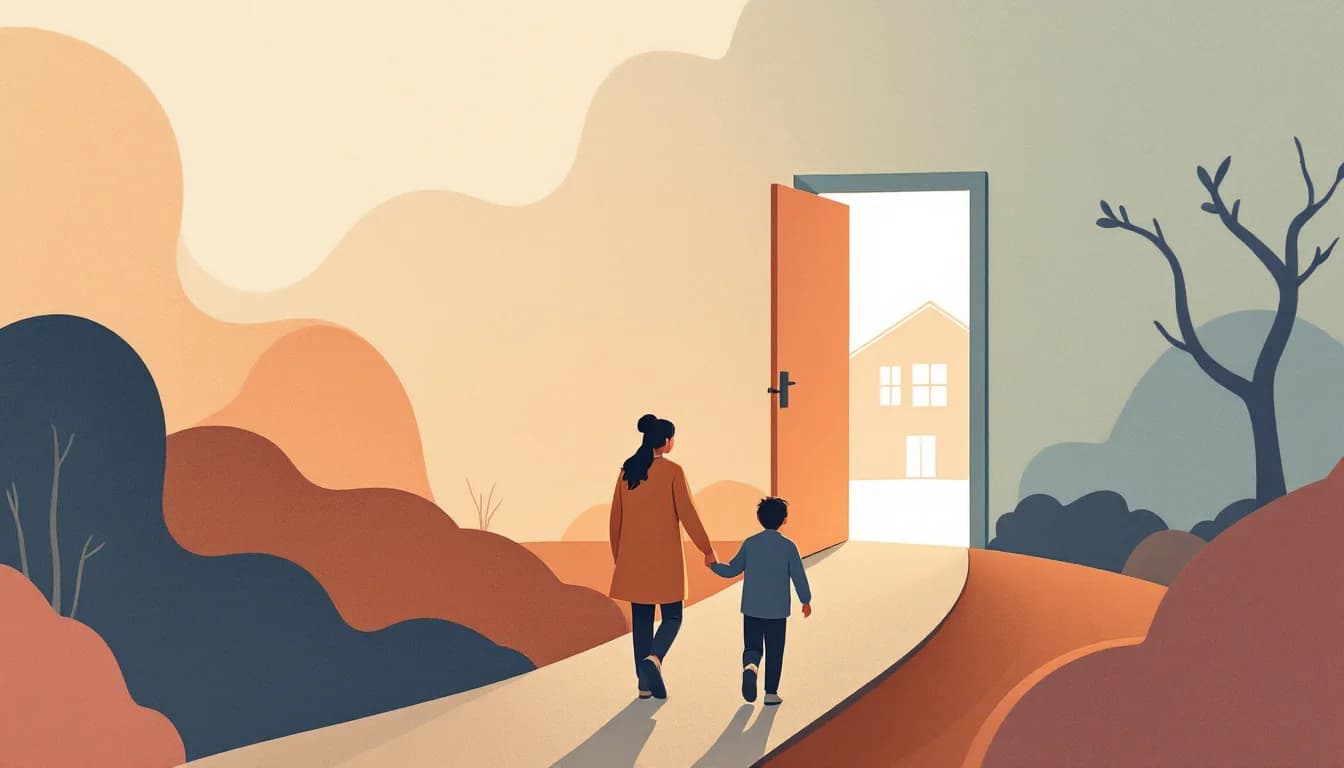
Most families arrive at this question without a diagnosis. They arrive with a feeling. A teenager who used to tell you everything is now sleeping until two in the afternoon. Grades that were solid are slipping. The friend group changed, the door stays closed, and there was something in a backpack that nobody wants to explain.
The first question every parent asks is whether this is ordinary teenage behavior or the beginning of something serious. The second is what to do about it — and almost nobody knows where to start.
This guide is for that moment. It explains what makes adolescent substance use different from adult use, how to tell experimentation from a developing disorder, what treatment actually works for teenagers, how to find and pay for it, and what families can do this week, before a single appointment is booked.
Why adolescents are not just smaller adults
Adolescence is the period when the brain's reward system matures faster than the system that puts the brakes on it. The regions most involved in decision-making, judgment, planning and self-control keep developing well into the early twenties, NIDA notes — which means a teenager is, in a literal sense, still building the equipment used to say no.
That matters in two ways. First, it changes the risk. NIAAA reports that people who begin drinking before age 15 are at higher risk of developing alcohol use disorder later in life, and that alcohol can alter brain development rather than simply passing through it. Second, it changes what help looks like. A treatment plan designed for a 40-year-old with a 20-year history is not automatically right for a 16-year-old with a nine-month one.
There is also an important clinical reality that families are often not told: substance use in young people is frequently tangled up with other conditions. NIDA notes that adolescent drug use is associated with attention-deficit/hyperactivity disorder, conduct problems, depression and anxiety — and that these conditions should ideally be treated at the same time as the substance use, not one after the other.
Is it experimentation, or is it a problem?
Both are real, and the difference is not measured by how much a teenager uses.
Clinicians diagnose a substance use disorder the way they diagnose any other condition: by a pattern over time. A person meets the criteria when they have two or more symptoms within a 12-month period — using more than intended, wanting to cut down and not managing it, spending a lot of time getting or recovering from the substance, continuing despite knowing it causes problems, or experiencing withdrawal. Severity runs from mild to severe. Experimentation can cross that line; partying that stays occasional usually does not.
Parents can watch for these warning signs of underage drinking, which NIAAA lists for families, teachers and caregivers:
- Changes in mood, including anger and irritability
- Academic or behavioral problems at school
- Increased rebelliousness
- Changing groups of friends
- Low energy
- Less interest in activities, or less care about appearance
- Finding alcohol among an adolescent's belongings
- Smelling alcohol on an adolescent's breath
- Problems concentrating or remembering
- Slurred speech
- Coordination problems
Two of these in isolation are probably nothing. A cluster that persists for weeks, alongside a marked change in who your child is, is worth a conversation and a professional assessment — not an interrogation.
It helps to know what "typical" actually looks like. The 2025 Monitoring the Future survey, supported by the National Institutes of Health, found that most teen drug use has held near the low point reached in 2021, and that a majority of teens abstain: 91% of eighth graders, 82% of tenth graders and 66% of twelfth graders reported not using marijuana, alcohol or nicotine in the past 30 days. Past-year use was 11% / 24% / 41% for alcohol, 8% / 16% / 26% for cannabis, and 9% / 14% / 20% for nicotine vaping across the three grades. In other words, use by the time a teen is a senior is common but far from universal — and abstention is the majority experience in every grade.
Alcohol remains the most-used substance among teens, and understanding its danger signs matters. NIAAA defines binge drinking for adults as reaching a blood alcohol concentration of 0.08%, but notes that youth reach the same level on fewer drinks: about three for girls and three to five for boys, depending on age and size. Underage drinking is linked to deaths from crashes, alcohol overdose, falls, burns, drowning and suicide; to injuries and impaired judgment; to a higher likelihood of being the victim or perpetrator of violence; and to trouble at school and with the law.
The supply has changed — this part is urgent
Whatever else is true about a teenager's substance use, one fact has changed the stakes: the pills are not what they appear to be.
NIDA warns that counterfeit pills made to look exactly like prescription pain medicines, anxiety medicines and ADHD stimulants are being sold through social media and websites. These fake pills can look identical to the real thing while containing fentanyl, often in doses that are lethal. People taking them frequently do not know fentanyl is present. Fentanyl is far more potent than most opioids, and even a small amount can cause a fatal overdose.
The consequence shows up in the data: overdose deaths involving fentanyl among adolescents have risen in recent years even though teens do not report using more illegal drugs overall. NIDA attributes much of that gap to counterfeit medicines for anxiety and ADHD with fentanyl mixed in — pills a teenager may believe came from a friend or an online "pharmacy."
For families this changes the practical advice:
- Assume no pill that did not come from a licensed pharmacy is safe. A pill stamped to look like a painkiller, a Xanax or an Adderall is not a lesser risk — it may be the single most dangerous thing in the house.
- Keep naloxone at home and know how to use it. It is available at pharmacies, many without a prescription. Everyone in the household should know where it is kept.
- Teach the "never use alone" rule. Most fatal overdoses happen when no one is present to call for help or give naloxone.
- Fentanyl test strips can reduce risk, though they detect only fentanyl and are not a guarantee. A negative strip does not rule out other adulterants.
What treatment for adolescents actually looks like
Here is the reassuring part: adolescent substance use disorders are treatable, and the treatments with the strongest evidence are behavioral.
NIDA's guidance is direct — adolescents with substance use problems need programs tailored to them. Some of the same behavioral therapies used with adults work well, including cognitive behavioral therapy (CBT) and contingency management, and there are several treatment approaches designed specifically for adolescents. Crucially, many of those approaches involve parents, caregivers or the whole family in the treatment process. In adolescent care, the family is not an audience. It is part of the treatment.
The main evidence-based components you are likely to encounter:
- Cognitive behavioral therapy (CBT) — helps a teenager recognize the thoughts, moods and situations that lead to use, and build skills to handle them.
- Contingency management — uses small, structured rewards to reinforce not using. The evidence base is especially strong for stimulants like methamphetamine and cocaine, and it is one of the adolescent-appropriate approaches NIDA highlights.
- Motivational enhancement therapy (MET) — a short, non-confrontational approach that builds a young person's own motivation to change, which matters enormously when a teen is ambivalent.
- Family-based therapies — several treatment models bring caregivers directly into sessions to change patterns at home, improve communication and rebuild trust. For adolescents these are among the most important tools available.
- 12-Step facilitation and peer support — structured encouragement to join mutual-help groups. Peer-led groups like Alcoholics Anonymous, Narcotics Anonymous and SMART Recovery are not the same as treatment, but they are free, not time-limited, and can support long-term recovery.
Levels of care, in plain language
NIDA describes the settings where treatment happens. Choosing among them is a clinical decision, usually guided by severity, safety, home environment and any co-occurring conditions:
- Outpatient care — regular office or telehealth visits for counseling, medication support, or both, delivered by a primary care provider or a specialist. Usually individual or group sessions.
- Intensive outpatient (IOP) — several hours of coordinated treatment per week, including individual and group sessions.
- Inpatient care — overnight care in a hospital or clinic, typically for medical needs related to substance use or to manage withdrawal safely.
- Residential care — extended inpatient treatment, usually weeks to months, combining counseling, medication, access to mutual-support groups and referrals to continuing care.
- Opioid treatment programs (OTP) — specialized programs for opioid use disorder, which are the only settings allowed to dispense methadone. Treatment usually pairs medication with behavioral therapy.
For many adolescents, treatment starts at the outpatient level and steps up only if the first plan is not working. A program that jumps straight to a 90-day residential placement without asking about school, family and severity is worth questioning.
Medications: what is approved for teens, and what is not
Medication is a routine part of adult addiction treatment and a narrower one in adolescent care — but it is not zero, and families are often misinformed in both directions.
- Opioid use disorder: buprenorphine is approved for adolescents 16 and older with opioid use disorder, per NIDA. Methadone is also used for adolescents under specific conditions through certified opioid treatment programs. Lofexidine is approved to treat opioid withdrawal symptoms.
- Alcohol use disorder: the medications used in adults (naltrexone, acamprosate, disulfiram) are not FDA-approved for adolescents. NIAAA notes that a prescriber may help reduce alcohol cravings in patients 18 and older. For an under-18 teen, expect behavioral treatment to carry the plan.
- Co-occurring conditions: medication for ADHD, depression or anxiety may be part of the plan — and should be coordinated with the addiction treatment rather than handled by a separate clinician working in isolation.
One common fear deserves a direct answer. NIDA states that medications like buprenorphine and methadone work by activating the same receptors as opioids but do not produce the euphoria associated with the drug, and that when taken as prescribed they are not addictive themselves. A parent should not refuse an evidence-based medication out of a belief that it is "swapping one addiction for another."
How to find and vet a program
Start with a professional assessment rather than a web search. NIAAA and the American Academy of Pediatrics both recommend that all youth be screened for substance use, and primary care — the pediatrician or family doctor — is a legitimate and often ideal first stop. A clinician can screen, identify co-occurring issues and refer to an appropriate level of care.
When you evaluate a program, ask concrete questions:
- What is your experience treating adolescents specifically? Not adults, not young adults — teenagers.
- How are families involved? Look for family therapy or caregiver sessions built into the schedule, not an optional weekly phone call.
- Is it accredited, and by whom? Ask about licensure and accreditation status.
- How do you treat co-occurring mental health conditions? The answer should describe integrated care, not a referral elsewhere.
- What does discharge planning look like? A good program plans the transition home and to continuing care from day one.
- How will school continue? Ask about academics, credit recovery and coordination with your district.
- What is your approach to medication for opioid use disorder? If your teen is using opioids, a program that refuses to discuss buprenorphine or methadone is limiting its options.
- What does it cost, and what does insurance cover? Get it in writing.
Watch for these red flags: pressure to commit and pay immediately; no licensing or accreditation information; no family component; promises of a fixed "cure" timeline; and staff who cannot explain what evidence-based care means for a teenager.
Paying for treatment
The financial side is a real barrier, and it stops families from acting. Some anchors:
- Insurance. Many plans are required to cover substance use disorder treatment at parity with medical care. Ask specifically about adolescent behavioral health benefits and whether the program is in network.
- Medicaid and CHIP. These programs cover children and adolescents in every state, and screenings in primary care are typically covered. Eligibility is broader for children than for adults.
- School and community services. School counselors, school-based health centers and community programs can often provide screening and early intervention at no cost.
- Sliding-scale and nonprofit programs. Many community providers set fees by income.
- Free help finding care. SAMHSA's National Helpline, 1-800-662-HELP (4357), is a free, confidential, 24/7 referral service for treatment and support, and FindTreatment.gov lists providers by location and payment type. NIAAA also offers a Treatment Navigator for alcohol use disorder.
What parents can do this week
You do not need a bed in a treatment center to change the trajectory.
- Start with concern, not a verdict. "I love you, I'm scared, and I need to understand what's happening" opens a door. An accusation closes it.
- Choose a calm moment. Not at midnight, not in front of siblings, not mid-argument.
- Get a medical assessment. A pediatrician or adolescent provider can screen and advise. This also removes the argument from being you versus your teen.
- Secure the medications in your home. If anyone has prescription opioids, stimulants or benzodiazepines, lock them up or remove them.
- Bring naloxone into the house and learn to use it. This is not pessimism. It is the same logic as a fire extinguisher.
- Protect the practical things. Sleep, meals, school, one adult who checks in.
- Do not cover up consequences indefinitely. Paying every fine, excusing every absence and smoothing over every problem teaches a teenager that use has no cost.
- Take care of yourself. Parent support groups and family programs exist for a reason, and they help you stay steady enough to be useful.
What tends to backfire: ultimatums delivered in anger, constant surveillance that destroys trust without changing behavior, and waiting for your teen to "hit bottom." Adolescents do not need to reach a dramatic low point to benefit from help, and waiting can mean waiting for a very dangerous event.
If your teen refuses help
Refusal is common and does not mean the door is closed. Keep the relationship as intact as you safely can, keep the offer of help open without nagging, and set boundaries you can actually hold. Family-focused approaches that work with parents — even when the teenager will not participate — have evidence behind them, and many families use them to change the household dynamics while they wait for readiness. Do not treat refusal as the end of the conversation; treat it as a stage.
Crisis resources
- 988 — Suicide & Crisis Lifeline, call or text, 24/7
- SAMHSA National Helpline — 1-800-662-HELP (4357) and FindTreatment.gov
- 911 for a suspected overdose — give naloxone, then call
- Poison Control — 1-800-222-1222
- NIAAA Alcohol Treatment Navigator
- Alateen (peer support for teens affected by someone else's drinking) and Al-Anon for family members
- SMART Recovery Teen & Youth program
The bottom line
Adolescent substance use disorders are treatable, and treatment works best when it is built around the developmental stage a teenager is actually in — with family involved, co-occurring conditions treated at the same time, and a clear plan for what happens after the program ends. The counterfeit-pill risk makes some of this urgent, but urgency is not the same as panic. The families who navigate this best tend to do three simple things: get a professional assessment early, insist that treatment include them, and stay in the room even when the teenager pushes back.
Sources
You might also read