Lewiston Voters Pass a 20-Syringe Cap. The Exchange It Restricted Collects More Than It Hands Out.
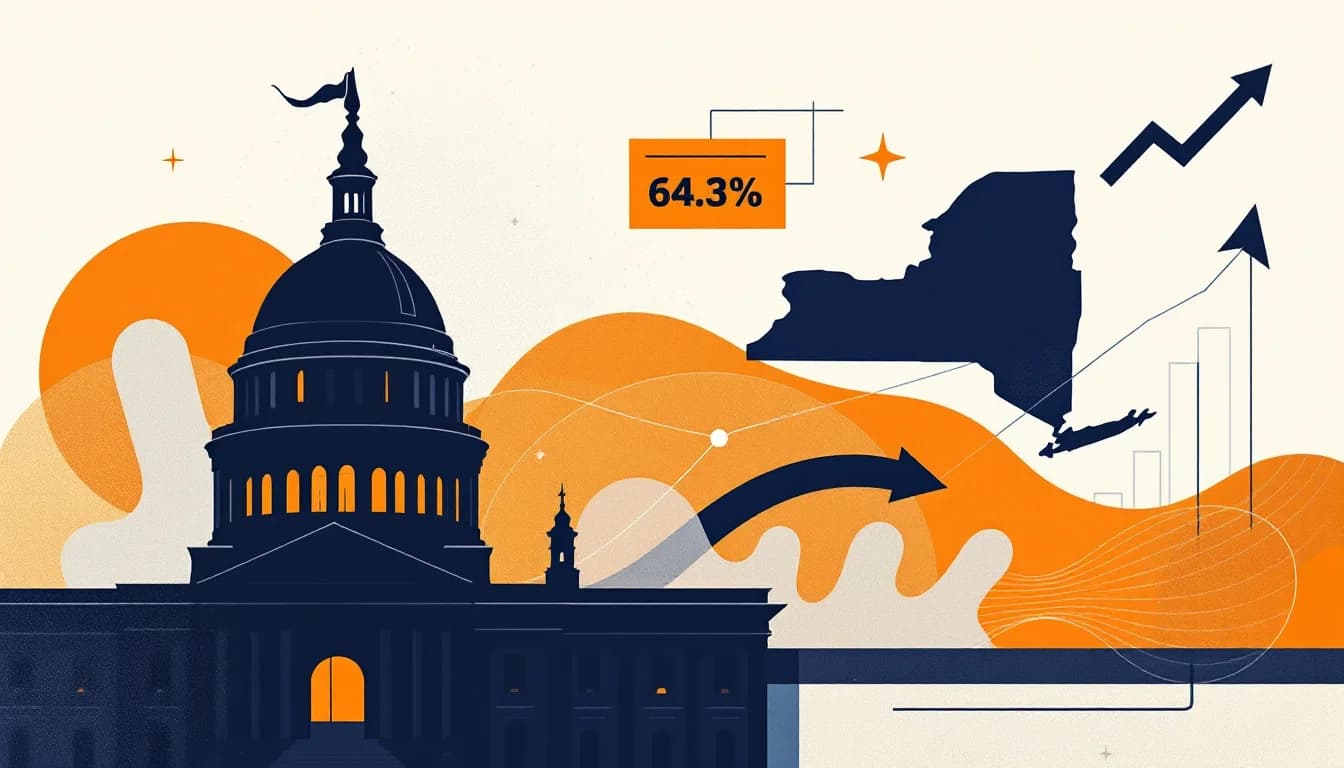
Lewiston passed Question 1 by 8,241 to 5,786, capping its exchange at 20 syringes a day. State filings show the site collects 1.47 per syringe given out.

Lewiston voters approved Question 1 on Tuesday, amending the city's syringe services ordinance to mandate a strict one-for-one exchange, a 20-syringe daily limit per person, one fixed location per provider, and a ban on mobile exchange units. The city clerk's unofficial report, filed at 11:34 p.m. on election night, records 8,241 yes to 5,786 no — 58.8 percent of the 14,027 ballots cast on the question, with turnout at 60 percent of the city's 24,455 registered voters.
The vote landed while the state's own health department was reporting that the site it targets collects substantially more used syringes than it distributes.
What changed, and what did not
Question 1 amended Chapter 22, Article XVIII of the city code — the article the City Council adopted as Ordinance No. 25-15, effective December 18, 2025. Half the question was already city policy, so the two documents have to be read together.
The existing article licenses syringe services programs as businesses: one license citywide, up to two locations for that licensee, Maine CDC certification at all times, no distribution to anyone under 18, background checks on staff and volunteers, five permitted zoning districts, and a 500-foot buffer from schools and daycares. It also states that "mobile units may not be licensed under this ordinance."
So two of Question 1's four elements were already in force: mobile units were effectively barred, and the city already capped how many operators could exist. What the vote changes is volume and site count — one location instead of two, a hard one-for-one return, and 20 syringes per person per day instead of a discretionary 100 per visit.
Twenty a day, measured against a 728-visit year
Certified programs report to the state under 22 M.R.S. § 1341. The 2025 annual report, covering November 1, 2024 through October 31, 2025, carries site-level tables in its appendices. Appendix R is Spurwink's Lewiston site at 1155 Lisbon Street, the program holding the city license.
Those figures: 170 people enrolled, 145 of them new; 728 exchange events; 105,999 syringes distributed; 155,687 used syringes collected and disposed of; 814 naloxone-distribution encounters; 7,144 referrals to medical care, testing, treatment, peer support, wound care and housing. Four HIV and four hepatitis C tests were recorded.
Three numbers follow from that table, none of them in a press release. The site averaged about 146 syringes per exchange event. It collected 1.47 used syringes for every new one it handed out — 49,688 more than it distributed, the gap Maine Public described from state data as "nearly 50,000 more syringes." And if each of those 728 visits had been capped at 20, annual output would have topped out near 14,560, roughly a seventh of what it distributed. That assumes one visit per person per day; the limit is daily, not per visit.
The program that drew the petitions is not the one that remains
The initiative followed complaints about discarded needles and a city worker stuck by a used syringe, at a time when Lewiston had two certified programs. The Church of Safe Injection's site, certified in 2021, was decertified in 2025; the report records that "in Lewiston, Spurwink quickly adjusted operations to meet community needs after the closure of CoSI."
The report still carries the Church of Safe Injection's partial-year data through April 2025: 1,683 enrollees, 1,438 exchange events, 75,050 syringes distributed and 59,647 collected — a return ratio of 0.79, roughly a quarter more syringes handed out than came back. Spurwink's site, the one that remains, runs the other way at 1.47. The measure sold as a response to needle litter now governs the operator whose filings show more collected than dispensed.
What happened in Baltimore when the rule went the other way
The closest experiment on this policy ran in Baltimore from 1994 to 2004. The city's exchange operated one-for-one for six years, then switched in 2000 to a policy that gave out less than one syringe for each non-program syringe returned.
Researchers at Johns Hopkins and the Baltimore City Health Department tracked every client visit across all three periods. In Drug and Alcohol Review in 2015 they reported that the program-level ratio of syringes distributed to returned fell from 0.99 to 0.88, bottoming at 0.85 in 2000. Distributions, returns, total clients and new enrollment all fell. During the restrictive period, 33,508 more syringes came back than went out. The authors concluded that with fewer clean syringes in circulation, such policies "could increase the risk of exposure to HIV" among people who inject drugs and the wider community.
Maine moved the other way for a stated reason. Its 2022 rule amendments created a "1:1+" standard letting a client who arrives with nothing to return receive up to 100 syringes at the site's discretion. The state report says this "effectively removes barriers associated with a strict 1:1 exchange policy and moves Maine closer to a needs-based exchange," which the CDC treats as best practice because it reduces injection risk behavior and bloodborne transmission.
Maine's own test case is two years old
Sanford tried this first. Its City Council enacted a strict one-for-one requirement two years ago, and last year Maine Access Points paused its Sanford exchange to see whether needle waste would fall. "And what we found is that it doesn't," executive director Anna McConnell told Maine Public.
The results are contested. Sanford City Manager Steven Buck told Maine Public that crews went from filling a five-gallon bucket with discarded syringes each week to collecting a handful — "it is day and night." McConnell says litter persisted in parks and trails. Both agree on what concerns patients: referrals to support and treatment declined, and McConnell says more people are now sharing and reusing syringes and developing serious infections.
Why the local rule matters more than the state one
A cross-sectional study published this year in JAMA Health Forum linked distribution laws to the presence of programs in 482 of the largest US localities. At least one program operated in 181 of them, 37.6 percent. The least restrictive legal environment carried 16.3 times the adjusted odds of having any program, and 2.7 times the rate of program locations.
The CDC's current position is that "nearly 30 years of research shows that comprehensive syringe services programs are safe, effective, and cost-saving, do not increase illegal drug use or crime, and play an important role in reducing the transmission of viral hepatitis, HIV and other infections."
Maine's statute leaves the local question open. Section 1341(1)(A) lets the Maine CDC limit how many syringes certified programs provide; Section 1341(1)(B) says the state "may not limit the number of hypodermic apparatuses that participants served by the programs may legally possess, transport or exchange." Question 1 regulates what a provider distributes, not what a participant carries, so it sits on the permitted side of that line — though whether a municipality may go tighter than the state's rule is untested.
What the city has not said yet
The clerk's numbers are unofficial, and Maine municipalities hand-count ballots, so certification follows the count. The license term runs 12 months and expires in March, making the spring renewal the next hard date on the city's calendar. Whether the city enforces the cap before then, and how a one-for-one standard applies to a client who arrives with nothing to return, is not addressed in the documents the city has published.
Cara Courchesne of the coalition Safe and Healthy Maine told Maine Public that the CDC and the World Health Organization recommend a needs-based model with no cap, and that "Maine is actually pretty conservative in that approach." She argued the cap would reduce visits rather than drug use. The test arrives with the next state report, which tracks distributions site by site: whether returns at 1155 Lisbon Street fall below distributions for the first time. Brewer banned syringe service programs outright on October 27; Auburn adopted its own syringe services ordinance in July.
If you need help now
Naloxone is available without a prescription at most Maine pharmacies and at syringe service sites; test strips remain legal and are handed out by the same programs. The infections these programs exist to interrupt — HIV, hepatitis B and C, endocarditis — are treatable regardless of where a syringe came from, and Maine's whole-person care waiver covers the Medicaid side of that care. Our October 28 report covers the state rules Question 1 overrides.
The SAMHSA National Helpline, 1-800-662-4357, is free, runs 24 hours a day in English and Spanish, and refers callers to sliding-scale treatment anywhere in Maine. The 988 Suicide and Crisis Lifeline handles substance-related crises by call or text. FindTreatment.gov lists licensed programs by ZIP code. If someone is unresponsive or breathing slowly after using drugs, call 911 — Maine's Good Samaritan law protects the caller.
Sources
- City of Lewiston — November 3, 2026 Unofficial State General and Municipal Election Results
- City of Lewiston — Ordinance No. 25-15, An Ordinance Pertaining to Syringe Service Programs (Chapter 22, Article XVIII)
- Maine DHHS / Maine CDC — Syringe Service Programs in Maine, 2025 Annual Report
- 22 M.R.S. § 1341 — Hypodermic apparatus exchange programs (Maine Legislature)
- CDC — Infectious Diseases in Persons Who Inject Drugs (June 2026)
- Sherman SG et al. — Consequences of a restrictive syringe exchange policy on utilisation patterns of a syringe exchange program in Baltimore, Maryland. Drug Alcohol Rev 2015
- Doonan SM et al. — State and Local Syringe Distribution Laws and the Presence of Syringe Services Programs. JAMA Health Forum 2026
- Maine Public — Lewiston referendum aims to reduce needle waste, but syringe program advocates say the effort is misguided (Oct. 30, 2026)
- SAMHSA National Helpline
You might also read