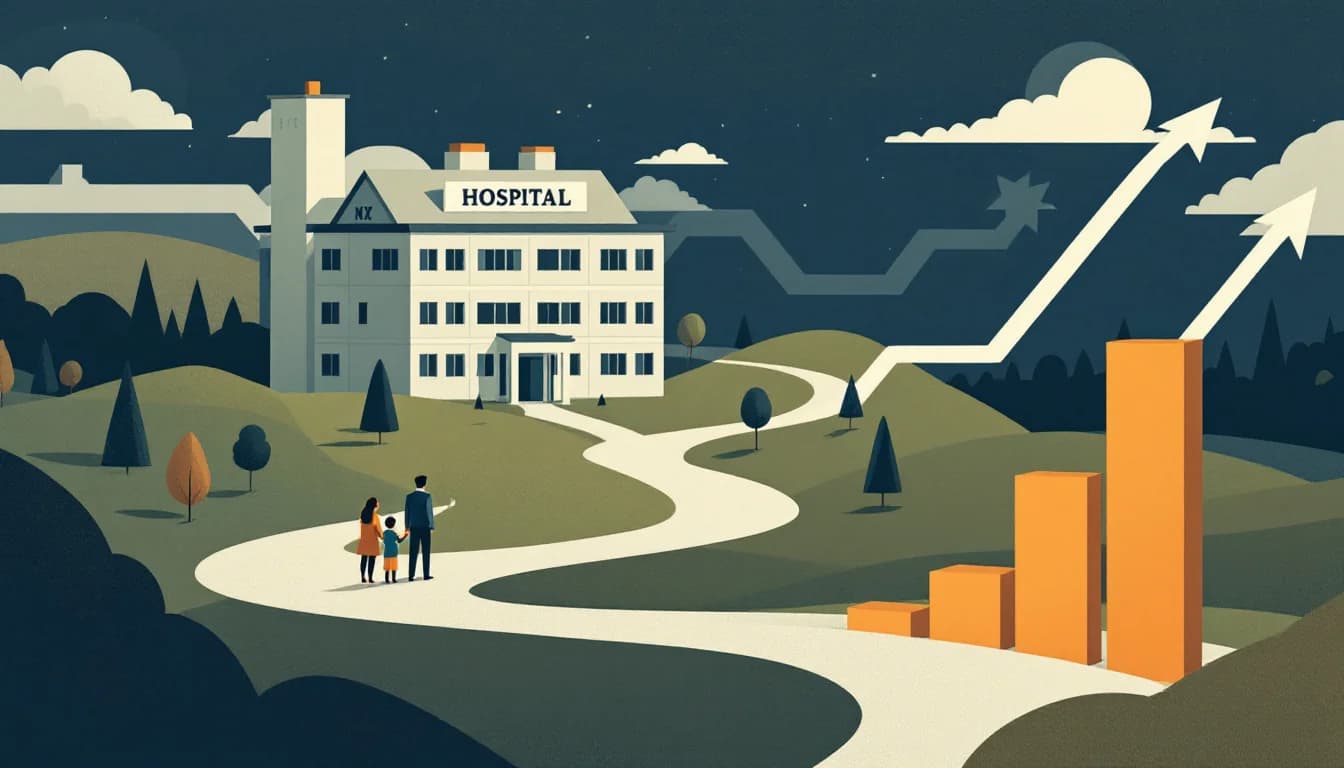
New York City Opens Second 'Bridge to Home' Site in Brooklyn, Adding 50 Beds With On-Site Addiction Treatment
NYC opened a second Bridge to Home facility in Brooklyn on Sept. 29, 2026 — 50 private rooms with on-site addiction treatment and up to 12 months of housing.

New York City opened a second Bridge to Home facility on September 29, 2026, converting part of the discharge crisis in its public hospital system into a housing-and-treatment pipeline. The new site, in Brooklyn near NYC Health + Hospitals/Woodhull in Crown Heights, will house up to 50 people in private rooms for as long as 12 months, with clinical and behavioral health services — including substance use disorder treatment — delivered on site.
Its first guests arrive this week. With the Manhattan site that opened in September 2025, the program can now serve nearly 100 New Yorkers at a time.
What Bridge to Home actually is
Bridge to Home is not a detox unit or an inpatient rehab. It is transitional housing attached to a hospital system, built for a specific and stubborn problem: patients who are medically cleared to leave the hospital but have nowhere safe to go.
Instead of discharging those patients to a shelter or the street, the program provides a home-like setting with on-site care, housing application assistance, and support through the transition into permanent housing. In Brooklyn, that means guests stay connected to medical and behavioral health services while they are there — substance use disorder treatment, individual and group therapy, social services, and around-the-clock medical support.
"Recovery should not end at the hospital doors, and no New Yorker should have to choose between getting the care they need and having a safe place to call home," Mayor Zohran Kwame Mamdani said in the announcement.
The discharge gap that drives readmissions
NYC Health + Hospitals is the largest provider of behavioral health services in New York City, serving more than 82,000 patients annually. Nearly half of those patients experience homelessness.
For anyone who has watched a family member cycle through detox, emergency rooms, and short-term programs, the clinical logic is familiar: the days and weeks after discharge are the most fragile. Without a stable place to sleep, medication adherence drops, follow-up appointments get missed, and a return to use becomes far more likely. Hospital teams see the consequences on repeat.
"Every week, our inpatient teams at Woodhull care for patients who are ready to leave the hospital but have nowhere safe to go, and too often we see them come back to us in crisis because they didn't have a safe place to live or stay adherent to their medications," said Dr. Rajvee Vora, Chief of Psychiatry at NYC Health + Hospitals/Woodhull. "Many of them cite homelessness as the number one reason."
The program's stated aim is to cut unnecessary emergency room visits and hospitalizations, reduce reliance on shelters, and reduce homelessness — by paying for the thing that a discharge plan usually cannot buy: time in a stable place with care attached.
"Leaving the hospital is not the end of recovery — in many ways, it is when the recovery work actually begins," said Dr. Omar Fattal, NYC Health + Hospitals' Chief Behavioral Health Officer. "For people with serious mental illness who are experiencing homelessness, that requires a safe and stable place to live."
What the first year in Manhattan showed
The Manhattan site's first year produced three numbers that explain why the city is expanding rather than redesigning:
- About 80% of current guests attend weekly clinical visits.
- 70% have completed housing applications.
- Among guests who transitioned into permanent supportive housing, the average length of stay was about seven months.
Those are engagement figures, not cure figures — and the program is careful not to promise more than that. A year of stable housing plus on-site clinical contact is the runway that lets a housing application, a treatment plan, and a benefits case actually move forward.
"A year ago, we opened Bridge to Home on a simple premise: patients with serious mental illness are far more likely to stay well if they leave the hospital for a stable place with care on-site, rather than a shelter or the street," said Dr. Mitchell Katz, President and CEO of NYC Health + Hospitals.
What it means for families navigating treatment
Two practical points are worth pulling out of the announcement for anyone supporting a relative with a substance use disorder or a co-occurring mental health condition:
Housing is part of the treatment plan, not a reward after it. The Brooklyn facility exists because discharge to unstable housing reliably undoes clinical progress. When families evaluate a treatment program, "what happens the day they leave?" is as important a question as the level of care itself — and programs that connect to transitional or recovery housing tend to hold onto gains longer.
Co-occurring conditions are the norm, not the exception. Bridge to Home is designed for people living with serious mental illness, and it treats substance use on site as well. New York State Senator Zellnor Myrie, whose district includes the new site, framed it the same way: "This program recognizes that stable housing and comprehensive care are essential for recovery and dignity."
What's next
Crown Heights residents and hospital social workers will see the immediate effect first: up to 50 more people a year leaving Woodhull — and other city hospitals — with an address and a care team instead of a shelter referral. The broader question is capacity. At nearly 100 beds citywide against 82,000 annual behavioral health patients, Bridge to Home is a demonstration of the model rather than a fix for the shortage of supportive housing.
The city has also signaled that housing providers themselves are now part of overdose prevention: NYC Health publishes guidance on reducing overdose risk in supportive housing programs and requires naloxone kits to be available upon request in nightlife establishments, with state rules extending naloxone requirements to more public premises through December 2026.
Where to get help
- 988 — call or text 988, or chat at 988lifeline.org, for 24/7 free and confidential crisis counseling and referrals for mental health or substance use. NYC Health notes counselors provide support in more than 200 languages by phone.
- SAMHSA National Helpline: 1-800-662-4357 — free, confidential treatment referrals, 24/7.
- Free naloxone in NYC — search the NYC Health Map for "Free Naloxone Kits" by ZIP code, call 311, or use one of the city's 24/7 public health vending machines. Over-the-counter naloxone is sold at retail pharmacies, and the state's N-CAP program can cover up to $40 of an insurance copay.
- findtreatment.gov — federal directory of licensed treatment providers.
- 911 — for an active overdose. New York's Good Samaritan law protects callers seeking help for someone overdosing.
If you are trying to plan a hospital discharge for yourself or a family member in New York City, ask the social work team specifically about Bridge to Home, supportive housing referrals, and outpatient treatment linkage before discharge day — those conversations move faster when they start on the ward rather than at the door.
Sources
You might also read