Medetomidine Withdrawal Is Landing Fentanyl Users in the ICU — New Data Shows How Fast It Grew
New JAMA research finds ICU-level care for medetomidine withdrawal among hospitalized opioid users quadrupled, reaching nearly a third of patients in 2025.
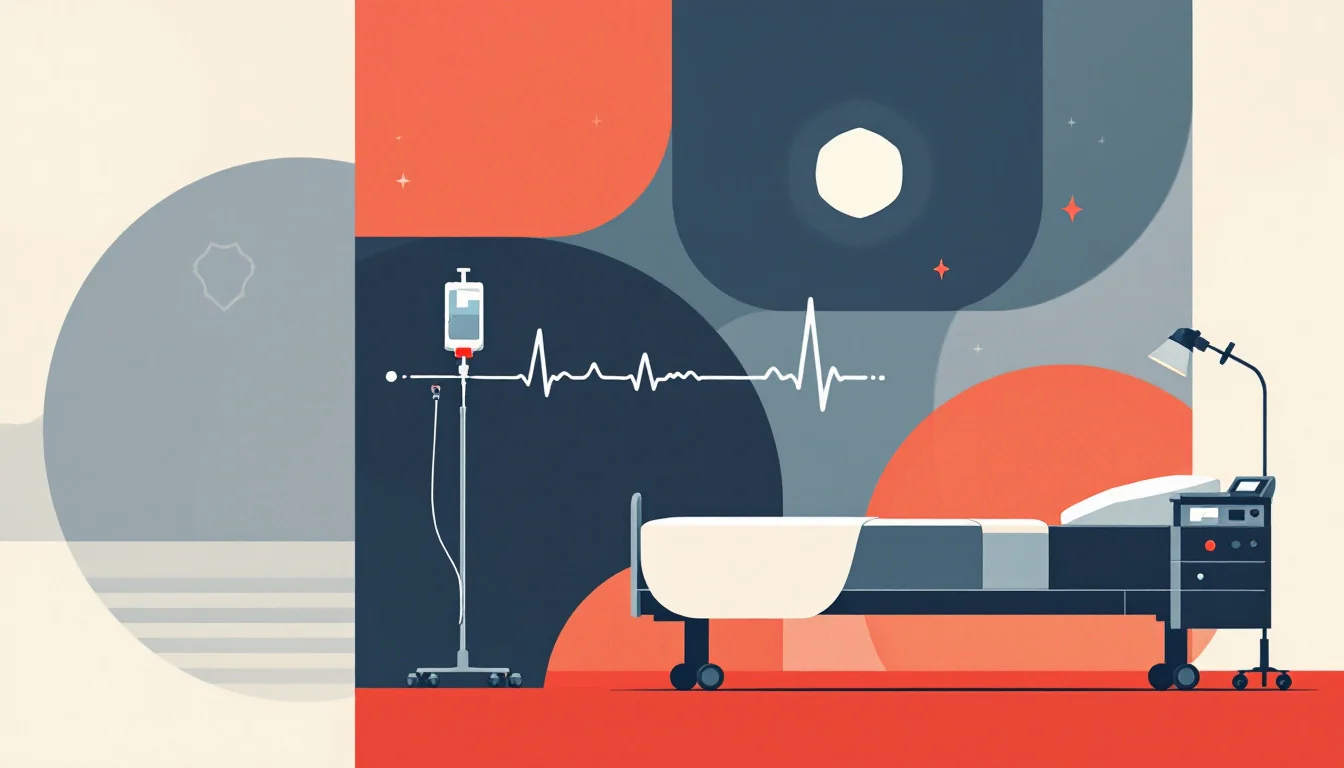
A veterinary sedative that has been quietly contaminating the U.S. fentanyl supply is now changing what withdrawal looks like in hospital emergency departments — and the change is measurable. On September 28, 2026, researchers at the Perelman School of Medicine at the University of Pennsylvania published an analysis in JAMA Internal Medicine showing that the share of hospitalized patients with opioid use disorder who needed intensive care–level treatment for medetomidine withdrawal roughly quadrupled between 2020 and 2025.
The takeaway is not that medetomidine is new. It is that the consequences of medetomidine are no longer theoretical. They are showing up as ICU beds, infusion pumps, and patients too sick to be managed with the usual comfort medications.
What the researchers found
The team reviewed records from two Philadelphia hospitals spanning 2020 through September 2025. Because medetomidine's appearance in the fentanyl supply is traced to roughly the middle of 2024, they split the data into a "pre-medetomidine" and "post-medetomidine" period.
The difference was stark:
- Pre-medetomidine period: just under 6 percent of hospitalized patients with opioid use disorder received dexmedetomidine — the intravenous hospital drug used to manage severe medetomidine withdrawal.
- Post-medetomidine period: roughly 20 percent of these patients required it.
- The final three months of the study: approximately 32 percent — nearly one in three.
Dexmedetomidine is not a comfort medication handed out casually. It is a continuous infusion that can drop heart rate and blood pressure and therefore requires close monitoring, typically in an ICU. "Historically, heroin withdrawal without these adulterants could be managed in outpatient or minimally monitored inpatient settings," said co-first author Ashish Thakrar, MD, an assistant professor of General Internal Medicine. "It was striking that, in the last quarter of our study, a third of patients required intensive care unit management for withdrawal from fentanyl mixed with medetomidine."
The researchers also found that patients needing dexmedetomidine required more medication overall and at higher doses. 79 percent received methadone, compared with 50 percent of patients with opioid use disorder who did not need dexmedetomidine, and 36 percent received buprenorphine, compared with 26 percent. They spent more time in the ICU on average, and they tended to be younger and more likely to be insured through Medicare.
"Patients are coming to us very sick, and we have had to rapidly adapt our treatments to serve the patients in front of us," said senior author Margaret Lowenstein, MD, research director for the Penn Center for Addiction Medicine and Policy. The work was supported by grants from the National Institute on Drug Abuse.
Why medetomidine withdrawal is different
Medetomidine is approved only for veterinary use, primarily as an anesthetic for larger animals. It is an alpha-2 adrenergic agonist — a completely different pharmacological class from fentanyl and other opioids. According to the Penn Medicine release, it is 100 to 200 times more potent than xylazine, the veterinary sedative that has circulated in the drug supply for years.
Three things make its withdrawal clinically distinct:
It is not opioid withdrawal. Standard comfort medications used for opioid withdrawal — clonidine, gabapentin, anti-nausea drugs, sedating antihistamines — are frequently not enough. Severe cases need a titrated IV infusion under monitoring.
It comes on fast and hard. Withdrawal symptoms include severely elevated heart rate (tachycardia), extreme anxiety and agitation, nausea and vomiting, sweating, tremor, and restlessness. Reports describe organ damage in severe, untreated cases.
Naloxone does not reverse it. Naloxone is an opioid antagonist. It has no effect on medetomidine. If someone is overdosing on a mixture of fentanyl and medetomidine, naloxone is still essential — the fentanyl can kill — but it will not resolve the sedation or the withdrawal syndrome. People who use drugs and their families should expect that a naloxone reversal may not produce the usual "wake up," and that more than one dose may be needed.
There is also a practical trap. Because severe withdrawal is so unpleasant and so hard to treat outside a hospital, people may leave care against medical advice, return to using, or use again before tolerance has reset. In an unpredictable supply, that is where fatal overdoses cluster.
What to do if this affects you or someone you love
If you use drugs: Do not use alone, and start with a smaller amount than usual. Carry naloxone — at least two doses — and remember that fentanyl test strips only tell you whether fentanyl is present. They will not detect medetomidine, xylazine, or other non-opioid adulterants, so a negative strip is not a clean bill of health. Avoid pills that did not come from a pharmacy.
Treat severe withdrawal as a medical event. Racing or irregular heartbeat, chest pain, fainting, confusion, severe agitation, or repeated vomiting are reasons to call 911 — not to wait it out. Withdrawal from medetomidine is not something to tough out at home unsupervised. Abruptly stopping is not safer than tapering under supervision.
If you are supporting a family member: Know that intense agitation and physical distress during withdrawal are a physiological response, not dramatics or manipulation. Naloxone still matters, because fentanyl is almost always present alongside medetomidine. Ask the care team directly about medications for opioid use disorder — methadone or buprenorphine. This study found that most patients needing ICU-level withdrawal care were already receiving them, and these medications blunt withdrawal and reduce craving. Good Samaritan laws in most states protect people who call 911 during an overdose, so calling for help is the safer choice for everyone involved.
Detox is a starting point, not a treatment. Getting through withdrawal safely is a window to begin ongoing care. Withdrawal management alone, without medication or continuing support afterward, carries a high risk of return to use.
Where to get help
- Emergency: Call 911. If someone is unresponsive or struggling to breathe, give naloxone and call immediately.
- 988 Suicide & Crisis Lifeline: Call or text 988, or chat at 988lifeline.org — 24/7, free, and confidential.
- SAMHSA National Helpline: 1-800-662-4357 (1-800-662-HELP) — 24/7, free, confidential, English and Spanish, for treatment referrals and information for individuals and families.
- Find a treatment provider: SAMHSA's treatment locator at findtreatment.gov lets you filter for opioid treatment programs, buprenorphine prescribers, and sliding-scale options.
- Naloxone: Available over the counter at most pharmacies, and often free through local health departments and harm reduction programs.
The bottom line
Medetomidine is not a future concern. It is already in the supply, and its withdrawal is already reshaping how hospitals care for people with opioid use disorder. The clinical message for families is simple: severe withdrawal deserves emergency care, naloxone is still necessary but not sufficient, and medication for opioid use disorder remains the most protective step available. The public health message is equally plain — "you can't address something you can't see," as the study's co-first author put it, which is why surveillance and honest clinical data matter as much as the drugs themselves.
Sources
- JAMA Internal Medicine — Boyce TG, Thakrar AP, et al. Dexmedetomidine Use and Intensive Care Unit Admissions for Patients With Medetomidine Withdrawal (published online September 28, 2026)
- Perelman School of Medicine, University of Pennsylvania — Withdrawal Med Use Points to Increasing Danger of Medetomidine (September 28, 2026)
- CDC Health Alert Network — Medetomidine in the U.S. Illegal Fentanyl Supply (CDCHAN-00527)
- CFSRE NPS Discovery — Medetomidine Monograph
- SAMHSA National Helpline
You might also read