Baltimore Warns of Benzodiazepines in the Drug Supply — Naloxone Doesn't Reverse Them
Benzodiazepines appeared in 31 Maryland drug-checking samples between April and July 2026, up from 14 in all of 2025. Why naloxone cannot reverse them.
Baltimore Warns of Benzodiazepines in the Drug Supply — Naloxone Doesn't Reverse Them
Baltimore, Maryland — The Baltimore City Health Department issued a public health advisory on November 2 warning that benzodiazepines are showing up more often in the illicit drug supply, and that their presence changes how an overdose has to be handled. The warning rests on the state's own drug-checking program, which identified benzodiazepines in 31 samples collected between April and July 2026 — up from 14 samples in all of 2025.
The practical point is narrower than the headline: naloxone still has to be given, because fentanyl was in most of those samples, but naloxone does not reverse the sedation a benzodiazepine causes. A person can start breathing again and still not wake up.
What Maryland's drug checking found
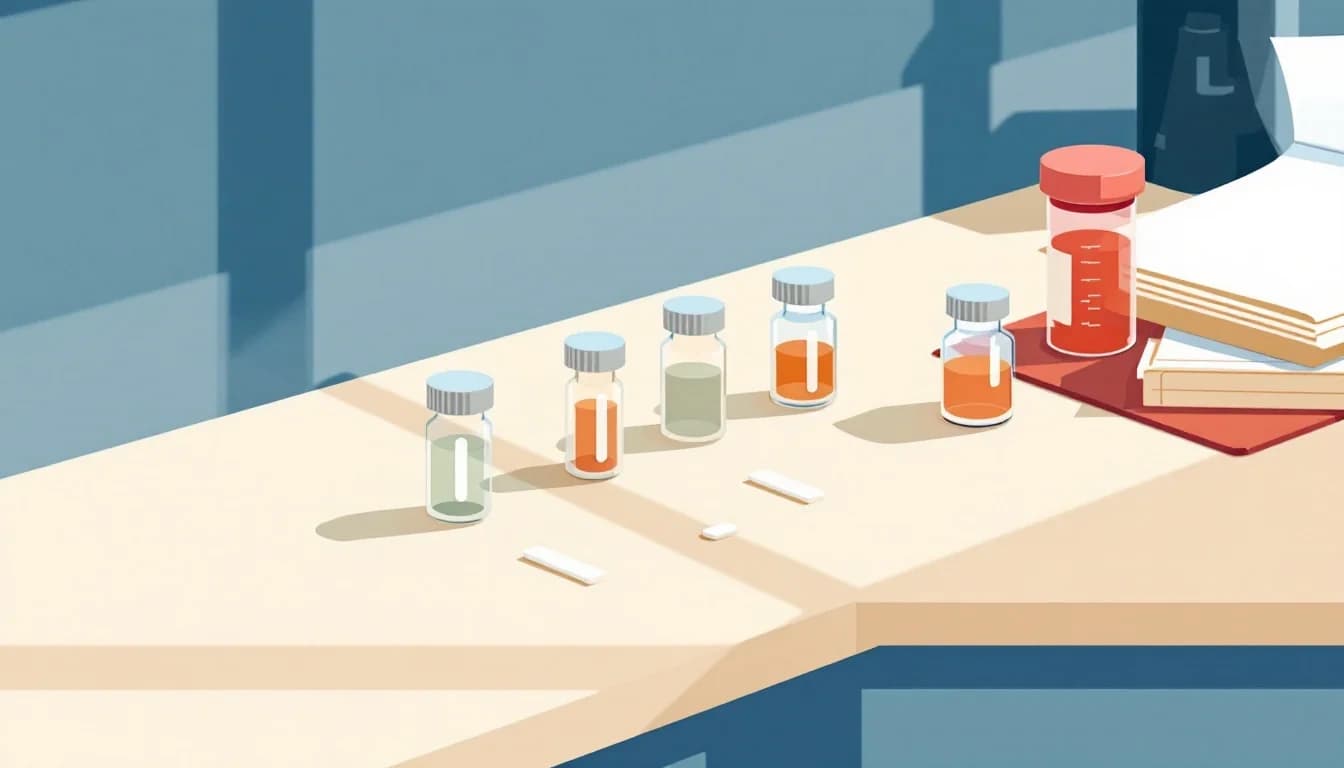
Maryland's Rapid Analysis of Drugs (RAD) program collects returned paraphernalia from participants at Opioid-Associated Disease Prevention and Outreach Programs and sends it to the National Institute of Standards and Technology for analysis. It is post-use — the sample has already been used — but it is one of the few near-real-time windows into a local supply.
Between April 1 and July 31, 2026, RAD found benzodiazepines in 31 samples. Benzodiazepines made up under 1 percent of samples tested in 2025; by July 2026 they were in 5 percent. Detections came from Baltimore City and from Calvert, Charles, Frederick and Talbot counties, with Charles County carrying the heaviest concentration — 20 of the 31 samples by the state's own table.
Four benzodiazepines appeared, and they are not interchangeable:
- Bromazolam, roughly 10 times more potent than diazepam (Valium)
- Ethylbromazolam, also roughly 10 times more potent than diazepam
- Deschlorodemethyldiazepam, roughly twice as potent as diazepam
- Lorazepam (Ativan), roughly twice as potent as diazepam
Three of the four are designer compounds never approved for medical use in the United States. The fourth, lorazepam, is an ordinary prescription drug — a reminder that "benzodiazepine in the supply" does not automatically mean a laboratory novel substance.
The combination that dominated the sample set is the one that worries clinicians: benzodiazepine plus fentanyl plus cocaine plus gabapentin, found in 18 of the 31 samples. The state notes that in Maryland's fatal overdose data, benzodiazepines are almost always seen alongside an opioid.
Why a benzodiazepine changes an overdose
Opioids and benzodiazepines depress breathing through different receptors. Naloxone is an opioid antagonist — it displaces opioids from the mu-opioid receptor and does nothing else. Benzodiazepines act on GABA-A receptors, where naloxone has no activity at all.
That produces a picture that can confuse both bystanders and responders:
- Deep sedation without opioid reversal. A person may be unresponsive, with low blood pressure and a slow heart rate, even after naloxone has restored normal breathing.
- Effects that outlast the reversal. Sedation can persist or return after naloxone wears off, because the benzodiazepine was never touched.
- A different endpoint. One dose of naloxone is typically enough to restore breathing, and if the person is breathing after that dose, the treatment has worked. More doses are not needed to make someone wake up. Breathing is the measure — not consciousness.
That last point runs against the instinct to keep dosing until the person is alert. In a benzodiazepine-involved overdose, repeated doses will not produce that outcome, and time spent on them is time not spent on rescue breaths. Rescue breathing maintains blood oxygen while the sedative wears off, and the recovery position protects the airway in the meantime.
For clinicians and first responders, the advisory adds: check breathing before responsiveness, continue naloxone when opioids may be co-present, expect persistent sedation, monitor vital signs, prepare for airway support, and consider toxicology when a sedative presentation is unexplained.
The gabapentin detail families miss
Gabapentin is prescribed for nerve pain, seizures, and sometimes anxiety. It is not scheduled as a controlled substance in most states and is often treated as harmless. It is also, per the RAD data, part of the most common four-drug combination in Maryland's benzodiazepine-positive samples.
Stacking a benzodiazepine, an opioid, and gabapentin means three substances that each slow the central nervous system, at doses nobody measured. That is one reason the advisory asks households to treat gabapentin as a medication worth locking up and counting.
The state's second-quarter RAD summary undercuts the idea of a "known" supply. Of 1,238 samples collected between April and June 2026, only about one in five fully matched what the person intended to buy, and 35 percent contained none of the intended substances. Of samples sold as opioids, 95 percent contained something other than the expected drug.
What to do if you or someone you know uses drugs
The advisory's recommendations are concrete and mostly free:
- Carry naloxone and use it on any suspected overdose. Free naloxone is available at more than 330 Overdose Response Programs across Maryland. Our guide to getting naloxone covers pharmacy access and how to use it.
- Use benzodiazepine test strips. They are available at most Overdose Response Programs, and Baltimore residents can order them by mail through Behavioral Health Systems Baltimore. They answer a different question than a fentanyl strip does, which is why carrying both matters.
- Use RAD if you are near a site. A sample tested at an outreach program tells you what was in your actual supply, not a national average.
- Do not use alone. If no one can be with you, the Never Use Alone line stays on the phone: 800-484-3731 or 877-696-1996.
- Start low and go slow, and go to a hospital for severe vomiting, uncontrolled shaking, chest pain, confusion, or withdrawal worse than usual.
Our guide to fentanyl test strips and drug checking explains what strips detect and what they miss. A federal analysis of 4,563 samples published in October made the same point at national scale: most adulterants in the fentanyl supply are not opioids, and opioid-focused screens do not see them.
What families should know about withdrawal
Benzodiazepine withdrawal can be life-threatening, and it is the part of this story most likely to affect a household that never touches the illicit supply. The advisory describes a syndrome lasting from 24 hours to multiple weeks — anxiety, tremors, hallucinations, insomnia, heart palpitations, nausea, vomiting, and seizures — often requiring immediate medical attention.
Someone who has taken a benzodiazepine daily, prescribed or not, should not stop abruptly. Maryland points clinicians to the Philadelphia Department of Public Health's benzodiazepine withdrawal management guidance for protocols. Our guide to benzodiazepine dependence and tapering covers what a safe taper looks like and how families can support someone through months of slow dose changes.
The bigger picture, and why this is not a reason to panic
Maryland's overdose curve has been moving in the right direction. The state reports 1,315 fatal overdoses in 2025, a 50 percent decline from the 2021 high of 2,800, and emergency department visits for suspected non-fatal opioid overdose fell to 5,668, down 41 percent from 9,633 in 2021.
Benzodiazepine detections rising inside a falling death curve is the honest way to read this. It is not a new wave arriving; it is a change in the composition of the supply that makes each remaining overdose harder to reverse and each withdrawal harder to manage. That is worth an advisory, a test strip, and a conversation — not alarm. The advisory also notes that supply changes do not land evenly: in 2025, fatal overdoses among Black residents of Maryland were 1.4 times higher than among white residents, and Black men over 55 were the most affected group.
Where to get help
- SAMHSA National Helpline: 1-800-662-HELP (4357) — free, confidential, 24/7 treatment referral
- 988 Suicide and Crisis Lifeline: call or text 988
- Never Use Alone: 800-484-3731 or 877-696-1996 — stays on the phone during use
- Poison Control: 1-800-222-1222 — for suspected benzodiazepine or mixed ingestion
- Maryland Overdose Response Programs: free naloxone, test strips, and RAD sampling sites at health.maryland.gov/RAD
- Behavioral Health Systems Baltimore: mail-order naloxone and benzodiazepine test strips for Baltimore residents
If someone is unresponsive or breathing slowly, call 911 first, give naloxone, give rescue breaths, and put them on their side. Do not wait to see whether they wake up on their own. What to do in the hours after an overdose covers what happens at the hospital and what to arrange before discharge.
For treatment options and support, families can also contact NW Recovery Centers to learn about available resources and pathways to recovery.
This alert is based on the Baltimore City Health Department's advisory of November 2, 2026, the Maryland Department of Health's benzodiazepine drug-checking advisory of August 25, 2026, and the state's Rapid Analysis of Drugs data. Drug-checking figures are preliminary and subject to change.
Sources
- Baltimore City Health Department — Public Health Advisory: Ongoing Threat of Benzodiazepines in Illicit Drug Supply (Nov. 2, 2026)
- Maryland Department of Health, Behavioral Health Administration — Public Health Advisory: Increase in Benzodiazepines Identified in Drug Checking Samples (Aug. 25, 2026)
- Maryland Department of Health — Rapid Analysis of Drugs (RAD) program
- Maryland Department of Health — RAD April–June 2026 Highlights (one-page summary)
- Maryland Department of Health — Overdose Data and statewide dashboard
- SAMHSA National Helpline
You might also read